Like most travelers, I’m fascinated by nuanced differences in items and slang between countries. Some of the differences in New Zealand households reminded me of things that were part of everyday life when I lived in Spain. For instance, tiny washing machines and refrigerators (relative to those common in American homes), heated towel racks in most bathrooms, and the common practice of hanging laundry on racks after washing instead of having a household clothes dryer.
As for Kiwi (New Zealander) slang, two of the most frequent phrases I encountered were “no worries” (no problem), and the ubiquitous “sweet as” (multiple meanings, but something akin to “OK, sounds good”). Some of the more popular non-Māori language terms I heard used in relation to fall outdoor activities were “track” (trail), “tramp” (hike), “keen” (enthusiastic about), and “scroggin” (if you used this word as an American in the 90s in reference to the dating scene, get your mind out of the gutter, it means “trail mix” in Kiwi-speak!). With over a dozen national parks, and twice as many regional parks spread out across the county, the New Zealand Dept. of Conservation maintains over 1000 areas for walking and tramping. We did our best to walk and tramp as many as we could during my stay 😊
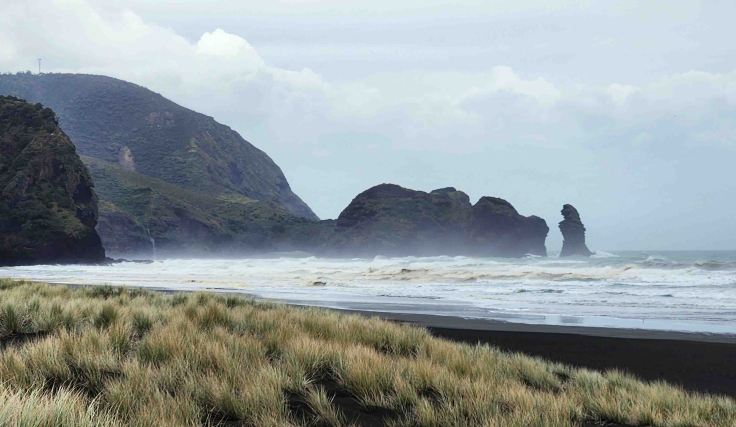
A stroll along the black-sand beach of Piha on a rainy, windy day really highlighted the qualities that make Piha New Zealand’s most famous surf beach. With many roads closed due to “slips” (landslides) from recent heavy rains, this hilly, western town on the Tasman Sea had a rugged, remote feel to its beauty. The rock formation in this pic is Lion Rock.
I stumbled upon this pinniped (flippered sea mammal) while walking Piha Beach. The photo resolution isn’t great (had to zoom in quite a bit in order to avoid disturbing its nap!), but it appears to have external ears, making it either a New Zealand fur seal or sea lion.
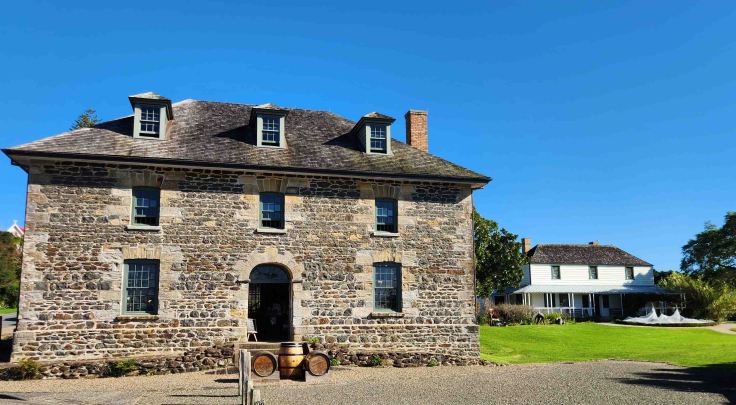
The Kerikeri Mission Station includes two of New Zealand’s oldest buildings, the Kemp House and the Stone Store. Established in 1819, Pakeha (non-Māori, or white people of colonizer descent) lived amongst the Māori and served as an area for the exchange of goods and technology. I was surprised to read on a placard in the stone store that in 1888, a man named John Black from Louisiana married a Kemp daughter and ran a small steam launch named the ‘Firefly’ which delivered and collected mail for families living along the inlet. I wonder if he was Cajun and what brought him to New Zealand?!
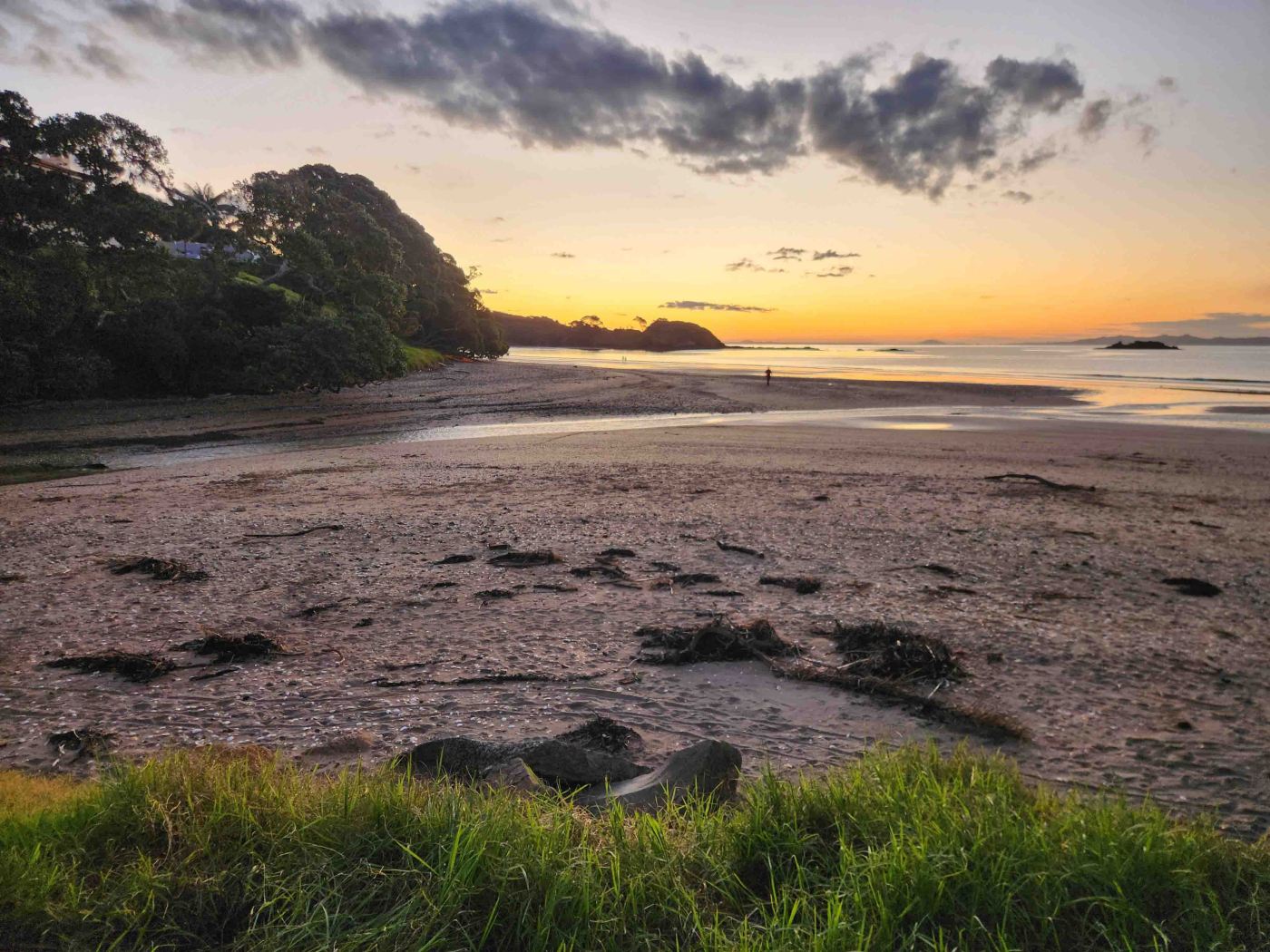
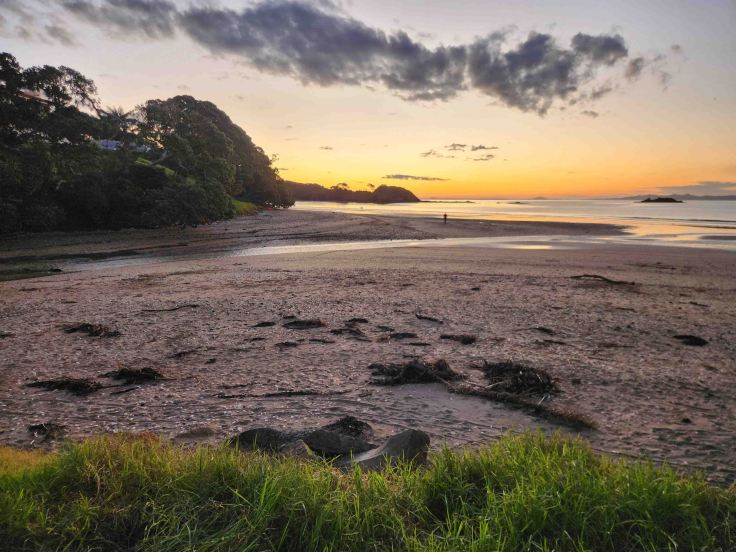
Coopers Beach at sunset. It’s one of several small settlements along Doubtless Bay in the Northland. The bay got its name from Captain James Cook declaring it was “doubtless a bay” upon exploring the area in 1796.
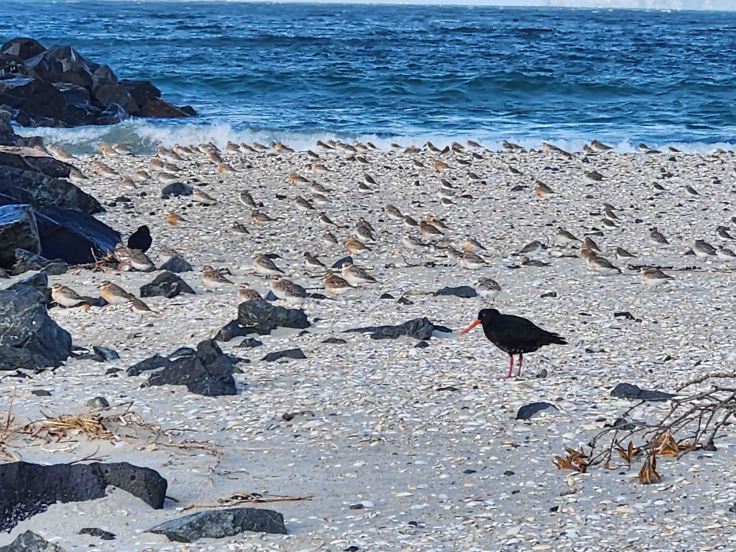
Thanks to my Cornell Lab Merlin bird ID app, I was able to identify 14 lifer birds (first time I’ve seen that species), including the Variable Oystercatcher (the big black bird with the orange beak) and the Double-Banded Plovers and Red-Breasted Dotterels all facing into the wind at Omaha Beach. I saw a meme on social media once that stated “One day you’re young and carefree, the next you’re like ‘Is that a Tufted Titmouse at my birdfeeder?” Yep, that accurately describes me!
It was a chilly, wet hike along Campbells to Murrays Bay Path. It wasn’t low tide, so the rocky path between the two bays was periodically overcome by waves as we traversed our way via Mairangi Bay. Spectacular views accompanied by salty South Pacific Ocean water.
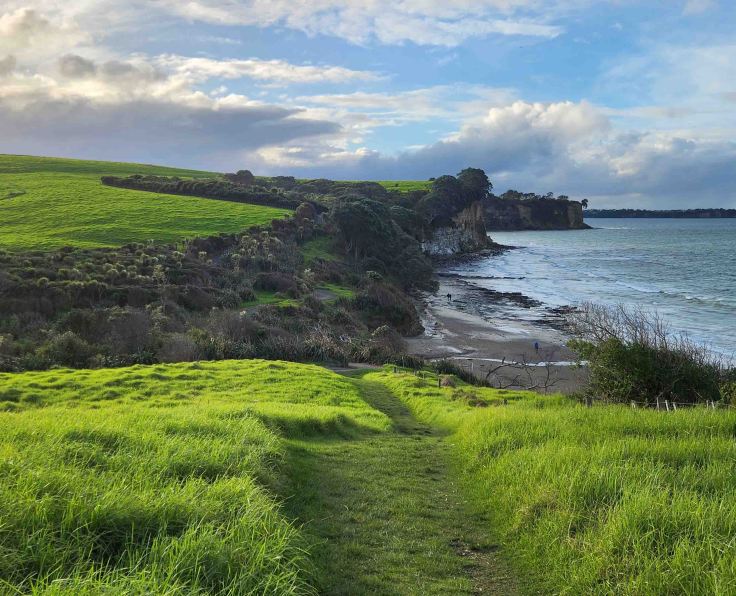
Our final hike of the trip was the coastal track in Long Bay Regional Park. The trail provided scenic views of Hauraki Gulf and Grannys Bay. Trails closed due to recent landslides prevented us from going all the way to Pōhutukawa Bay, but the time shaved from the hike allowed us to make it home before a major downpour 😊
My sightseeing wasn’t limited to hiking though, there was time for other shenanigans as well!
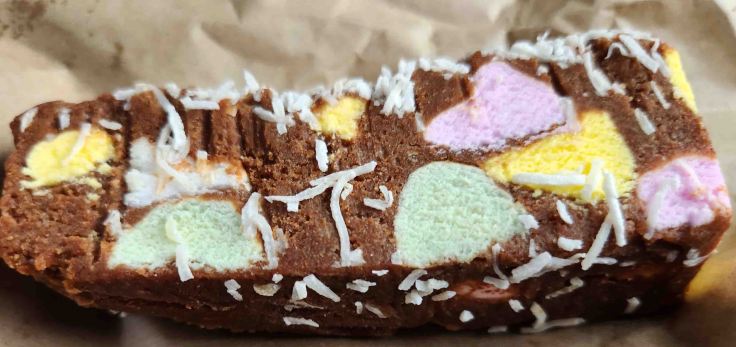
A uniquely New Zealand dessert – Lolly Log Cake. Made with some type of fruit puffed candy. It looked fun, but I wouldn’t order it again!
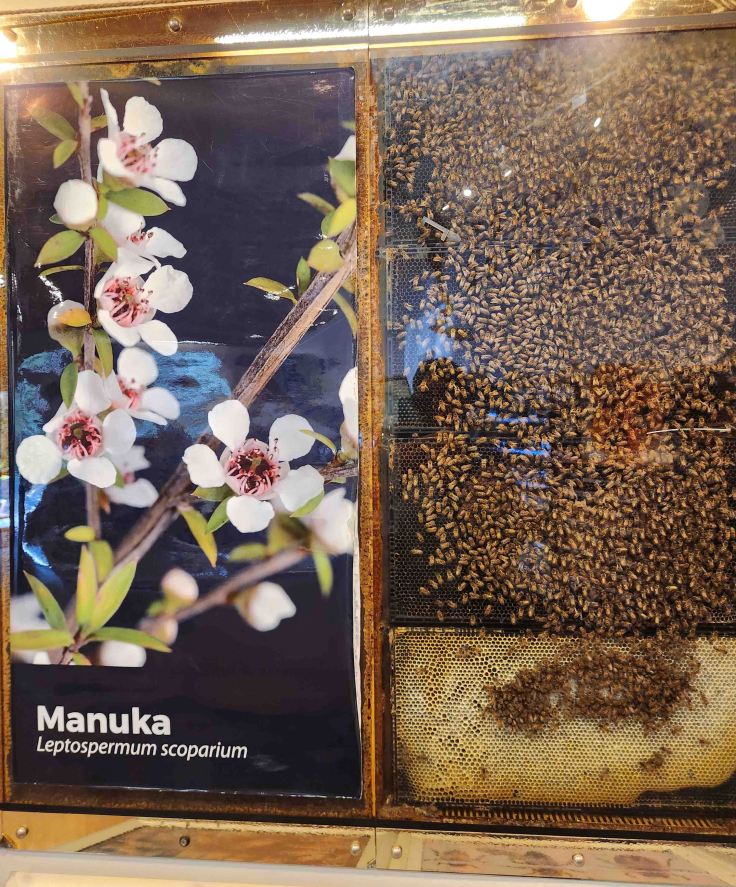
A stop at the Honey Centre in Warkworth provided a great opportunity to see the bees at work and to sample numerous types of New Zealand honey. Recognized for its anti-inflammatory, antimicrobial, and antioxidant properties, honey in general has long been considered medicinal by many cultures. Honey derived from New Zealand Manuka trees seems to have especially potent biological effects. Plus, it’s quite delicious!
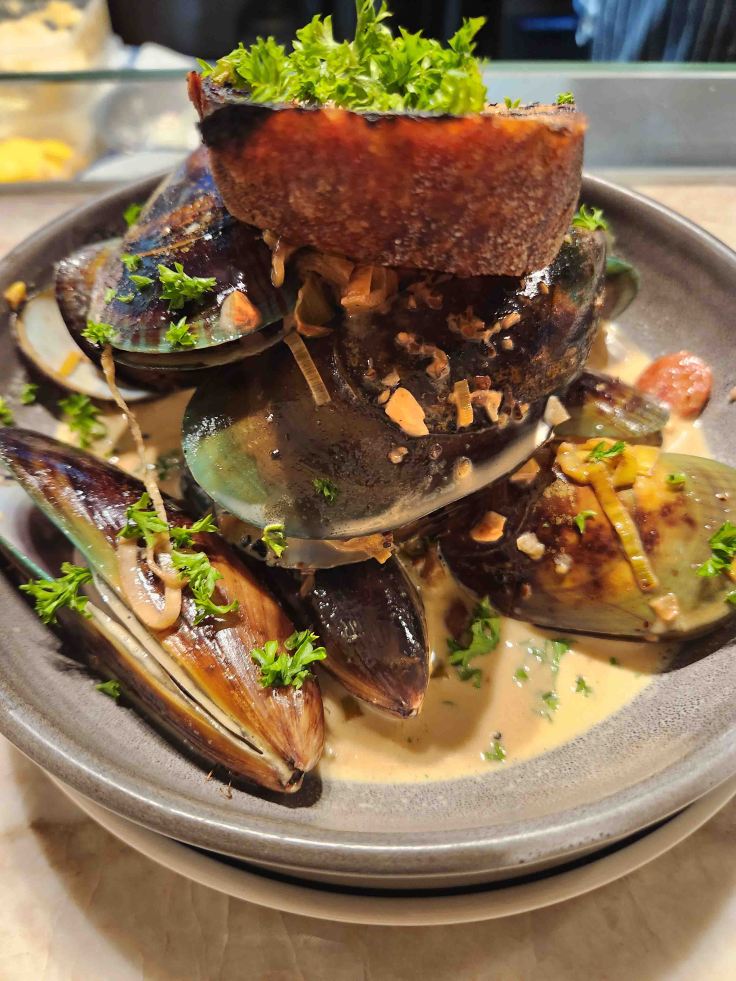
Green-lipped mussels are indigenous to New Zealand and can be found on many restaurant menus. I was lucky enough to eat them a couple of times before an algae outbreak forced a ban on harvesting them at the end of my trip. These were at Shuckers Brothers in Auckland’s Viaduct Harbor.
In an interesting turn of events, I ended up seeing the musical ‘Hamilton’ live while in New Zealand. The atmosphere buzzed with anticipation waiting for two Māori cast members to appear on stage. The audience absolutely went crazy when Matu Ngaropo, who played George Washington, made two facial expressions at the end of a scene that most westerners associate with a war haka (dance) – bulging the eyes (pukana) and sticking out the tongue (whetero). Such a great play and fun time!
And just like that, my time in New Zealand had come to an end. The sightseeing, hiking, eating, and learning about Māori culture and history was wonderful, but the highlights of my trip were reconnecting with April and forging new friendships with Jitka and Keri. I’m looking forward to our next adventures together!



 FitHippie Adventures
Leave a comment