I was getting antsy, it had been almost an hour since I last stopped. My hip, shoulder, and bladder were making it very clear that it was time for a respite – the physical triad that seems to compete for the “limiting factor” award to my motorcycle riding these days. Like indicators on my bike, once they alert me to an issue, ignoring the warnings will likely result in a much bigger inconvenience later down the road.
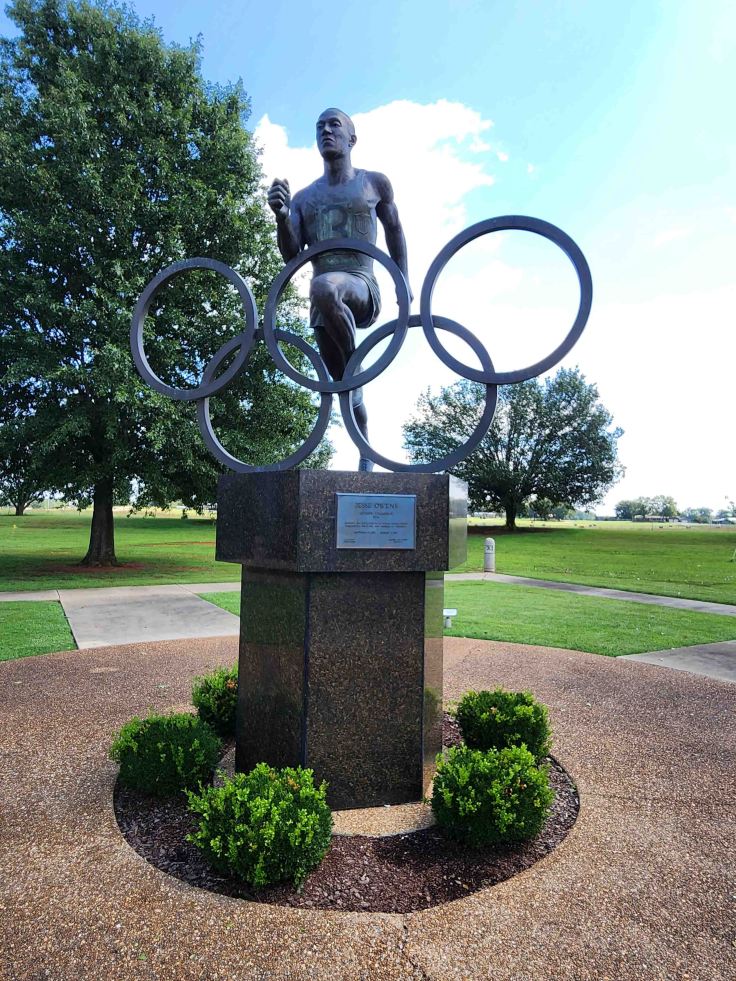
So, when I saw the signs for the Jesse Owens Museum and Memorial Park near Danville, Alabama, I eased off the throttle, took the turn off AL-36, and was rewarded with a little serendipity.
The museum in Oakville, Alabama is comprised of numerous collections from Owens’ college, Olympic, and philanthropic stages of life, as well as a mini-theater where I watched the documentary “Return to Berlin” in which Owens narrates original footage from the historic 1936 Olympics. The 30-acre memorial park around the museum includes a replica of his boyhood home, where he lived with his sharecropper parents, on the land now part of the park, and an actual long jump pit to visualize how incredibly long his gold-medal winning jump of 26 feet, 5-5/16 inches was back in 1936.
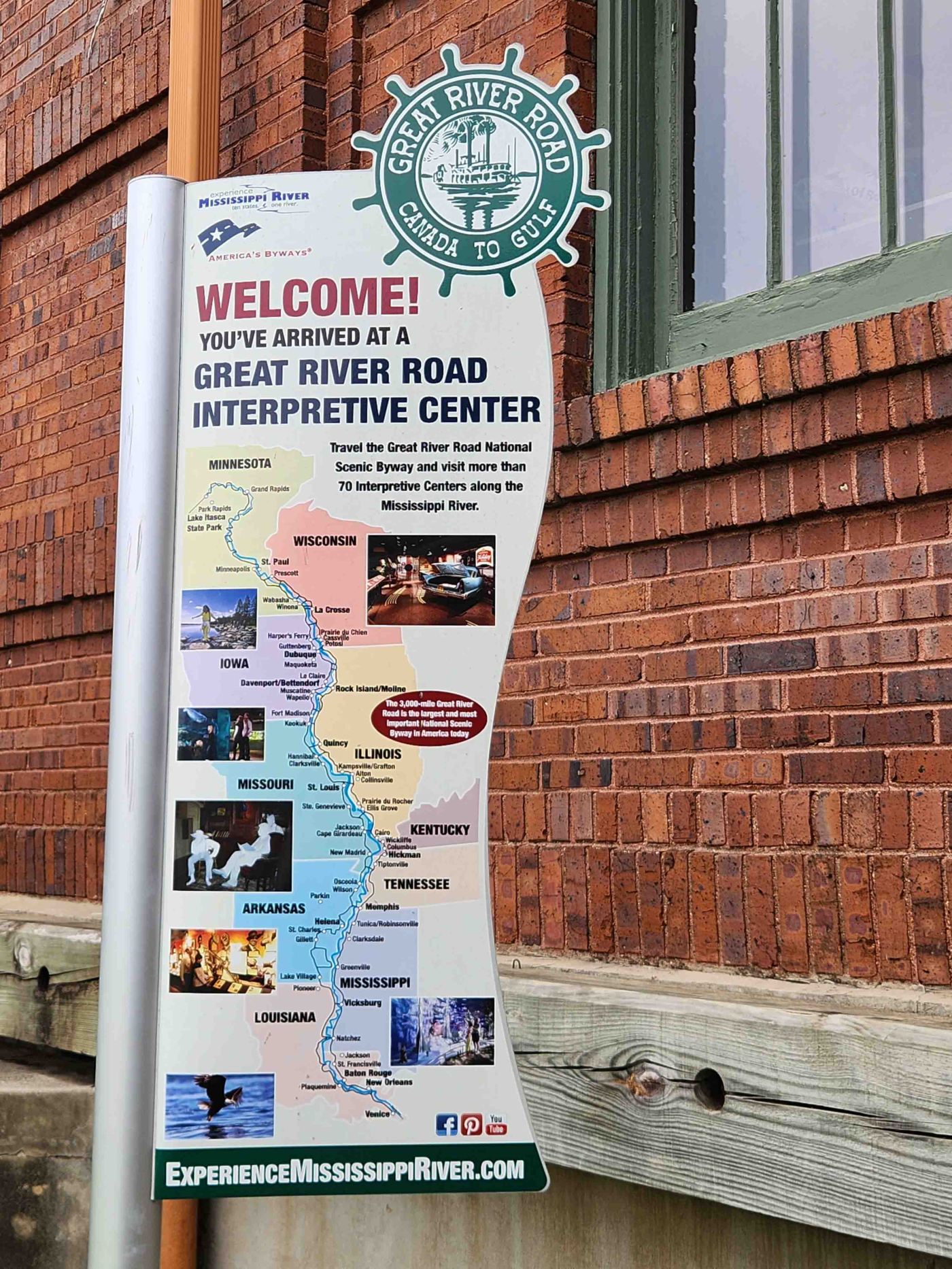
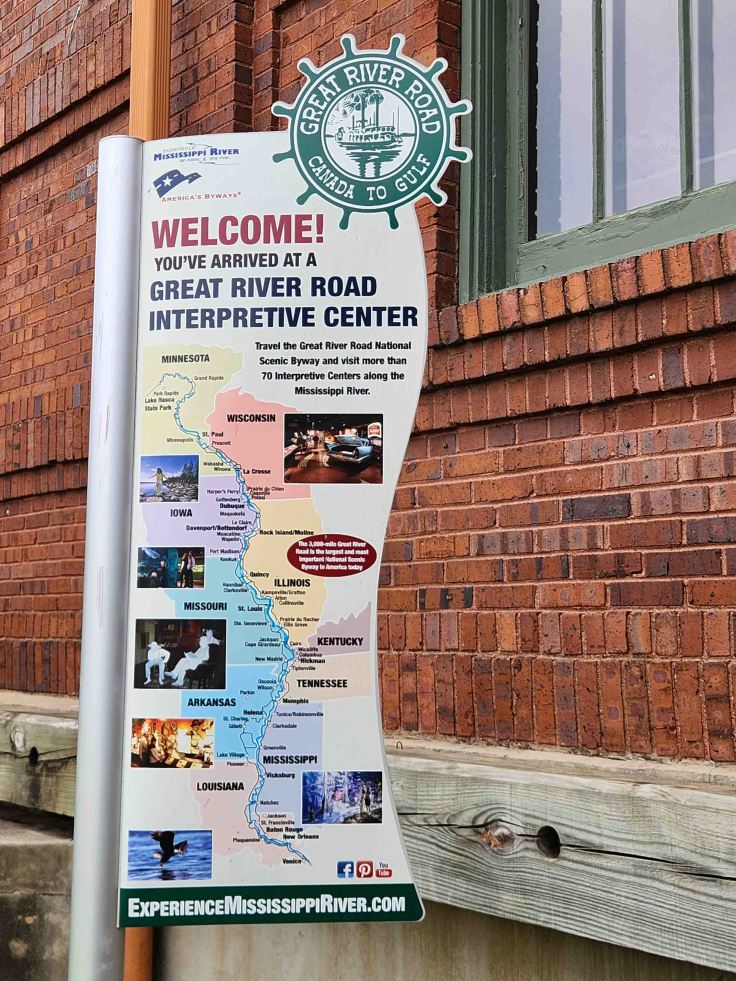
The Great River Road, a National Scenic Byway and All-American Road, runs through 10 states – from the river’s source in Itasca State Park in Minnesota, to its terminus into the Gulf of Mexico at Venice, Louisiana. Along the route and adjacent areas, there are more than 70 interpretive centers that tell the story of this waterway’s economic, ecologic, and cultural impact on the communities along its course.
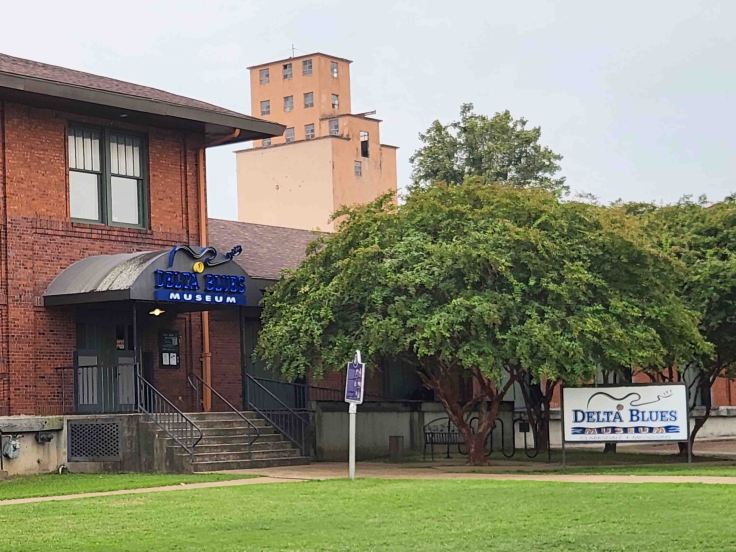
The Delta Blues Museum, located in a former railroad depot in Clarksdale, Mississippi, is filled to the brim with artifacts and exhibits pertaining to the history and heritage of “the unique American art form of the Blues.” From photos of Clarksdale’s native son Ike Turner and Rocket 88, to Muddy Waters’ former actual wooden home, to John Lee Hooker’s and B.B. King’s guitars, to artifacts from the life of Big Momma Thornton, this place has it all. Unfortunately, no photography is allowed in the museum, so you’ll have to visit it yourself to see the incredible collections.
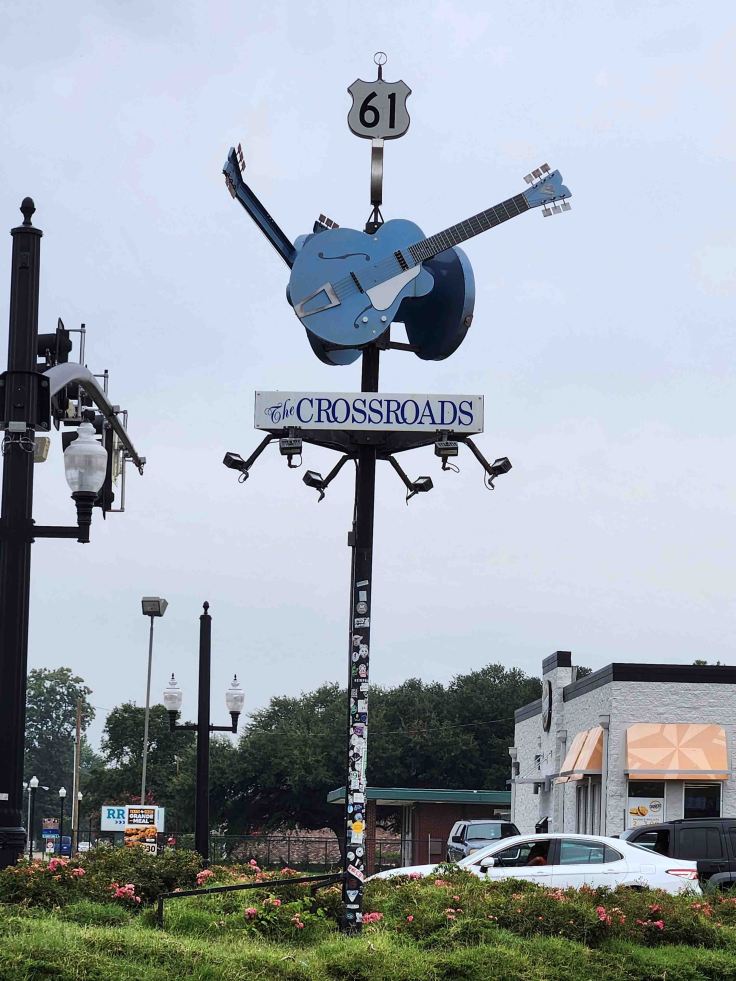
Clarksdale, Mississippi is hailed as the “Birthplace of the Blues” and is home to the infamous crossroads where legend has it, Robert Johnson encountered the devil and sold his soul in exchange for supernatural guitar-playing skills. Though the actual location of the original dirt crossroads is hotly debated, this symbolic sign resides at the now, quite crowded, intersection of US-61 and US-49, the former location of the Dockery Plantation, near Clarksdale.
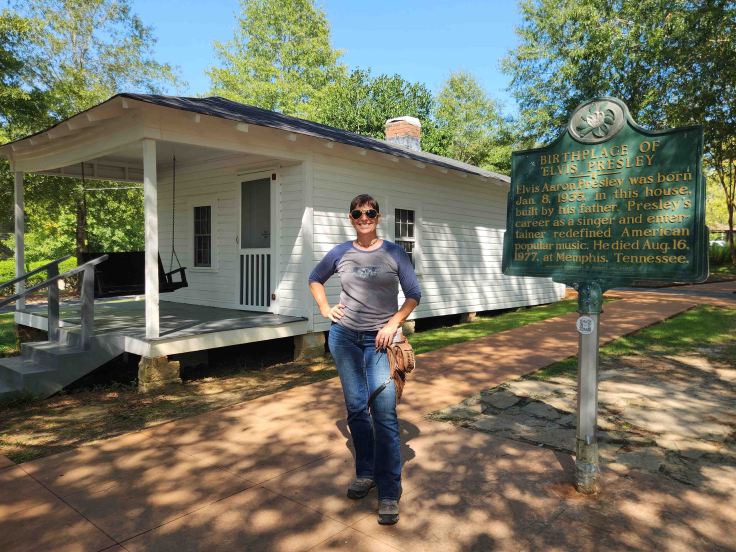
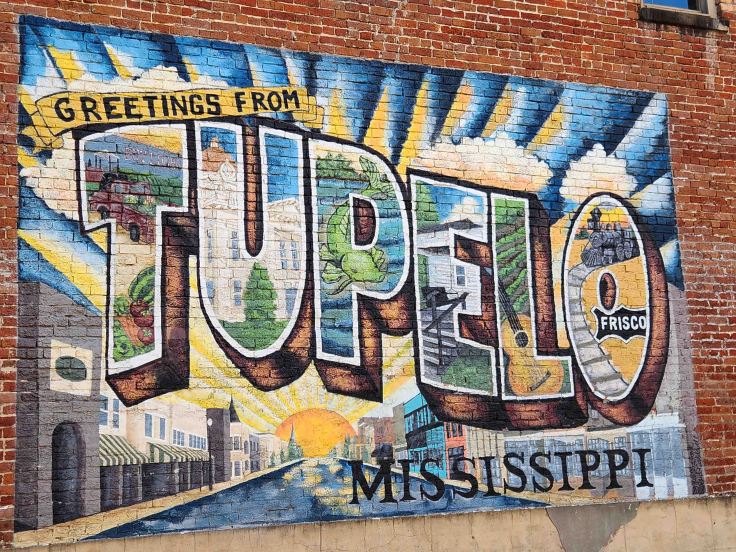
A stop at Elvis Presley’s Birthplace in Tupelo, Mississippi provided great insight into how the legend developed his unique musical style. At the convergence of several musical genre influences – Appalachian Mountain bluegrass and country, Mississippi River delta cotton region blues, bible-belt gospel, and radio-broadcast Grand Ole Opry western – Tupelo provided the perfect milieu for Elvis’ musical development.
In addition to Elvis’ birthplace, there were several memorials to him around town, as well as the Tupelo National Battlefield and the Natchez Trace Parkway (both of which I had visited back in May while on 4-wheels).
After my stay in Tupelo, I headed west to just over the border of Arkansas, then turned south to parallel the Mississippi River’s west bank. The Louisiana section of the Great River Road runs through the Atchafalaya National Heritage Area. Stretching across 14 parishes (the Louisiana version of a county), this zone is “among the most culturally rich and ecologically varied regions in the United States, home to the widely recognized Cajun culture as well as a diverse population of European, African, Caribbean, and Native-American descent.”
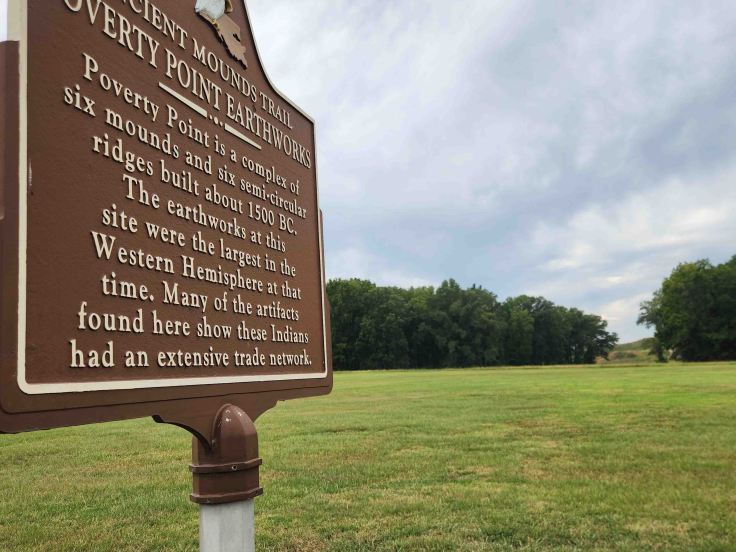
The Poverty Point World Heritage Site in Louisiana consists of a group of prehistoric earthworks made up of complex mounds and ridges build by American Indians around 1650 BC. The arrangement of the earthworks, as well as the raw material used in their tools, weapons, and ornaments found at the site, indicate that this civilization was well organized and had established trade and travel as for as the Appalachian Mountains and beyond.
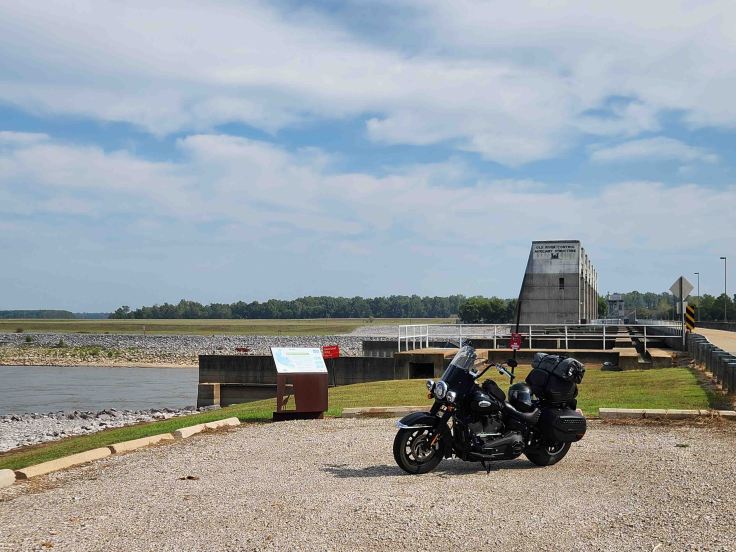
To prevent the naturally-occurring course change over time of the Mississippi River, the U.S. Corps of Engineers built flow control structures such as this one along River Road (which have arguably added to Louisiana’s coastal erosion problem). Being from Louisiana, I had always heard of the Morganza Floodway, but had yet to see it in person – it was huge! Operated to relieve pressure when the Mississippi River exceeds its banks, these structures have been opened only twice (in 1973 and 2011) since their completion. (Info from on-site placard)
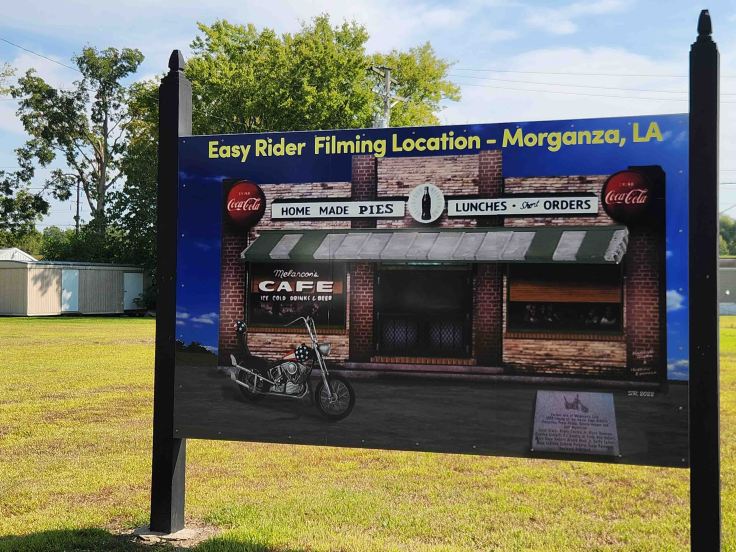
It’s always fun to stumble upon a little pop-culture on my travels. Though the café itself, and even the historic marker identifying the site, have been removed in the last few years, this sign indicates the prior location of Blackie Melancon’s Café, which played prominently into the storyline of the cult-classic biker film of 1969, “Easy Rider.” I’m sure that the town must have been, and probably continue to be, torn about its notoriety, since the film depicted the Morganza town locals in a less than flattering light.
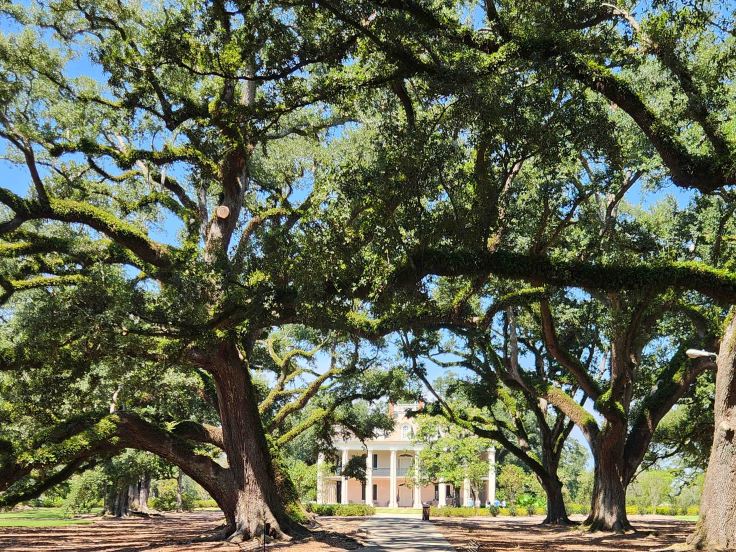
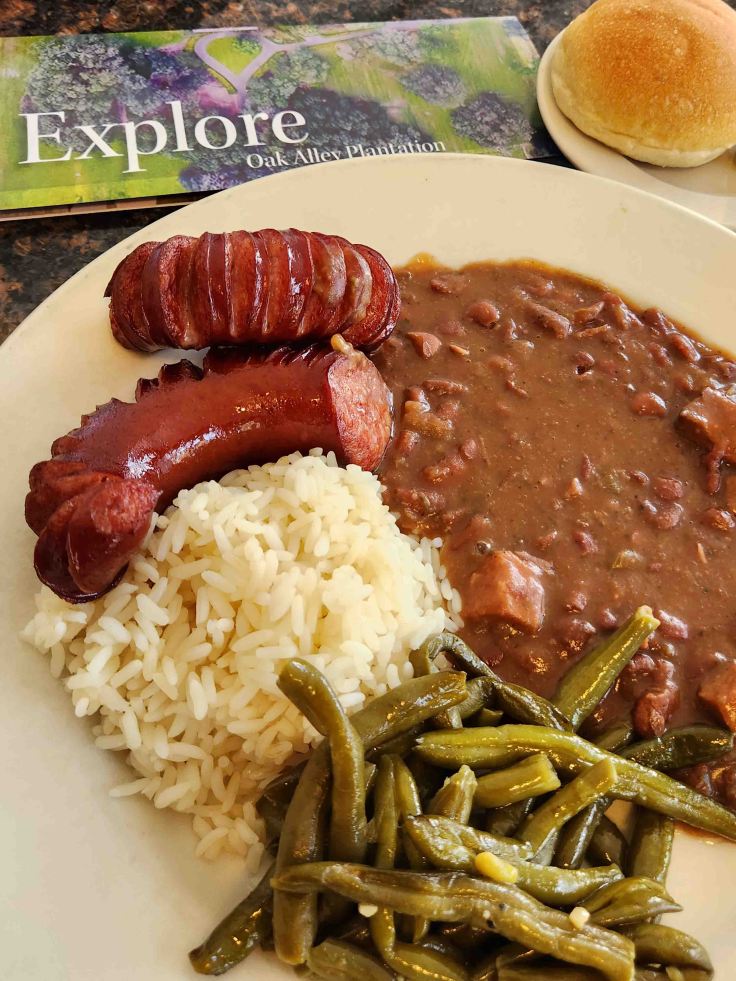
I have been to the iconic Oak Alley Plantation in Vacherie, Louisiana before, but I decided to stop by again to take in the 28-acre grounds and to have lunch. Built in the late 1830s, the plantation buildings (the “Big House” and surrounding 63 structures) are designated as a National Historic Landmark.
Louisiana red beans and rice are creamy, always cooked with ham/ham bone, and typically served with sausage. Traditionally, this dish is served on Mondays since that was wash day, so beans could be simmered for a long time while the laundry was being tended, and perhaps because it made use of the ham bone left over from Sunday dinner.
Though the tours and exhibits at Oak Alley included information about slavery at the plantation and exhibits including “slave quarters,” as well as a searchable database containing the names, origins, and relationships of people enslaved there, the primary focus appeared (to me) to be on the aesthetics of the buildings and grounds, the family who owned it, and its economic impact on the family and community. The fact that the plantation’s whole economy, and that of much of the country at the time, was built at the great mental and physical expense of enslaved people, is not elevated to the same level as other realities of plantation life depicted there. If you’ve followed my blog for any amount of time, you know that I like to get multiple perspectives on a topic. If more than one group of people were affected/influenced by the event/site about which I am learning, I want to hear their perspectives, as well as the dominate groups’, to help me form a more well-rounded opinion of the topic. Not just a side note, but an equally weighted perspective. Yes, it’s uncomfortable, but so are many lessons in life that end up making me a better person. For this reason, I hopped back on my bike and rode a few more miles down River Road to the Whitney Plantation in Edgard, Louisiana.
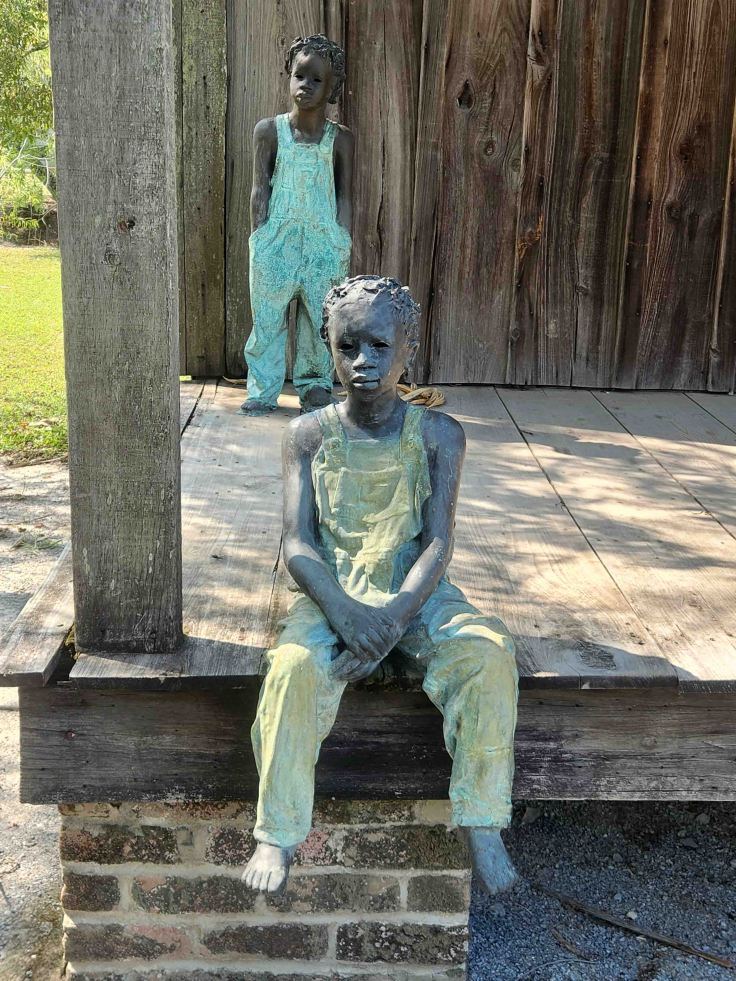
The Whitney Plantation is the “only former plantation site in Louisiana with an exclusive focus on slavery.” I took the 90-minute guided tour and was blown away by the depth of information and context given regarding “the generations of Africans and their descendants that were enslaved here to establish and maintain indigo, rice, and sugar crops.” A series of haunting sculptures, known as “The Children of the Whitney,” represent the numerous children who were enslaved at this plantation and throughout the south. Many common misconceptions regarding the benevolence of slave holders (both white, and to a much lesser extent, black), and the reasons why formerly enslaved people “chose” to stay working on plantations in the post-Civil War south were addressed. Lots of food for thought and topics for further exploration.
Excited to see my family again, it didn’t take me long to cover the 50 or so miles from the Whitney to my parents’ house. Time for a few off-bike days and quality time with relatives.
 FitHippie Adventures
Leave a comment