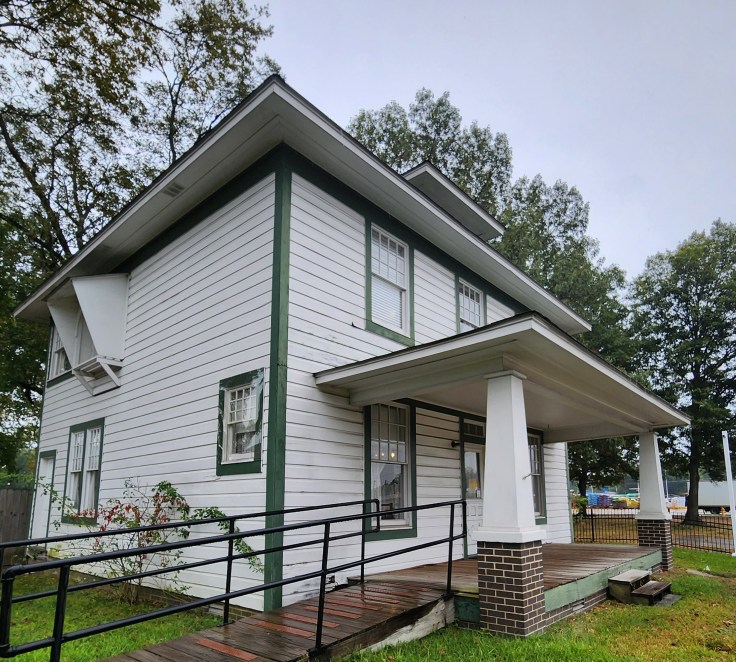
Drops fell from the sky in a steady rhythm as I rode east through the rain from Texarkana along AR-67. My rain gear kept me dry for a while, but the steady downpour had overcome the impervious layer and seeped through to my clothing. I stopped in Hope, Arkansas to visit the President William Jefferson Clinton Birthplace Home, where I tried in vain not to drip water all over the national historic site visitor center. The empathetic rangers overlooked the puddle I left under my seat after watching the park film and took me on a tour of the house. In my quest to visit all 400+ National Park Service units, it’s been enlightening to visit the homes of former presidents and gain insight into the domestic lives that formed their characters.
The house where former President Bill Clinton spent the first four years of his life in Hope, Arkansas became a national historic site in 2011. His boyhood home is one of over two dozen National Park Service sites dedicated to preserving the environments in which former presidents lived.
This road trip hadn’t been particularly long or arduous so far, but riding a full day in the rain found me longing for a little pampering. I parked the bike along the wet streets of Hot Springs and decided to stay a few days in the city known as “America’s Spa.”
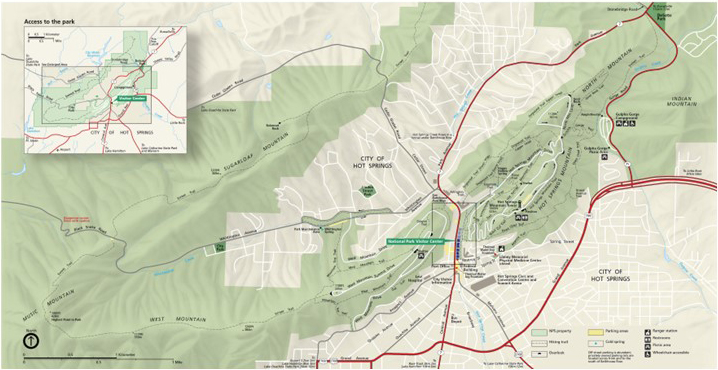
The 5,500-acre Hot Springs National Park is located “within the Zig-Zag Mountains, a section of the Ouachita Mountains of central Arkansas and eastern Oklahoma. The name Zig-Zag comes from the sharply angular folds of the rock when seen from above.” There’s archeological evidence that Native Americans came to this area for thousands of years to quarry rocks unique to the area to make tools and weapons. Though the city of Hot Springs is a distinctly different entity from the national park, part of its historic downtown falls within the park boundary. (NPS website)
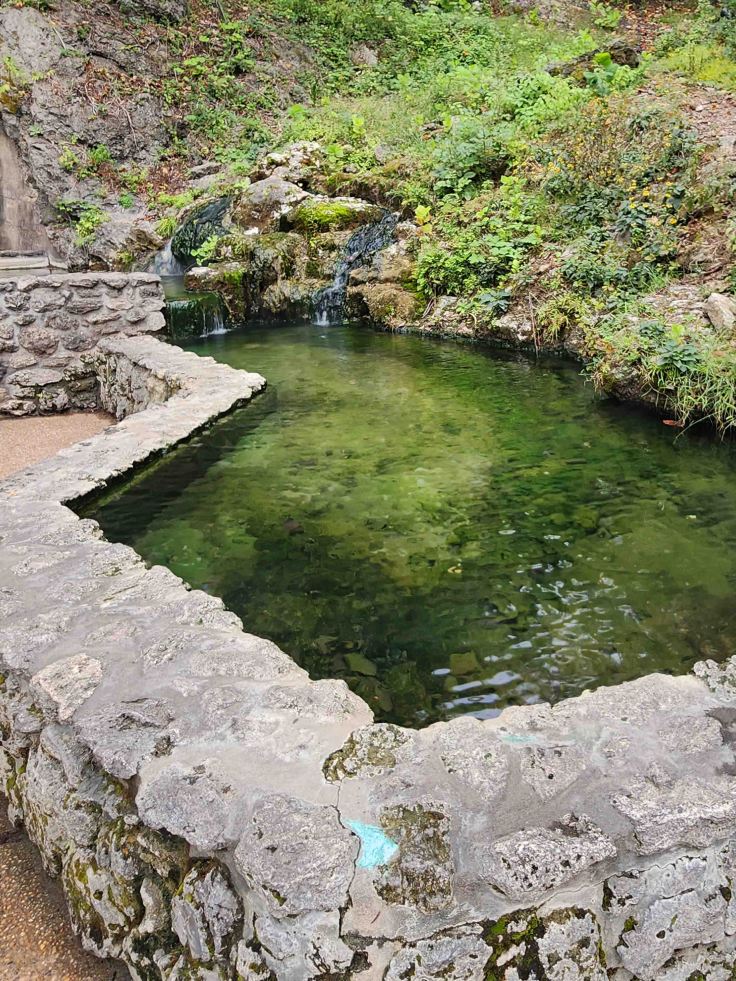
Rainwater travels down 6,000-8,000 feet below the Ouachita Mountains, slowly heating up the deeper it goes. The hot water dissolves minerals like silica, calcium, calcium carbonate, magnesium, and potassium from the rock. The water that bubbles up in the hot springs throughout the area, is 143 degrees F and contains trace amounts of these minerals. Soaking in this mineral water (cooled to 90-104 degrees F) and drinking it chilled or at room temperature, have long been believed to be curative and therapeutic for numerous ailments and conditions. The light grey, spongy looking rock you see in this photo of Hot Water Cascade on Arlington Lawn, is limestone rock referred to as tufa, a product of cooling calcium carbonate. The water, propelled by pressure, re-emerges in the springs from nearly 8,000 feet below, is rain and melted snow that trickled into rock cracks over 4,000 years ago. (NPS website)
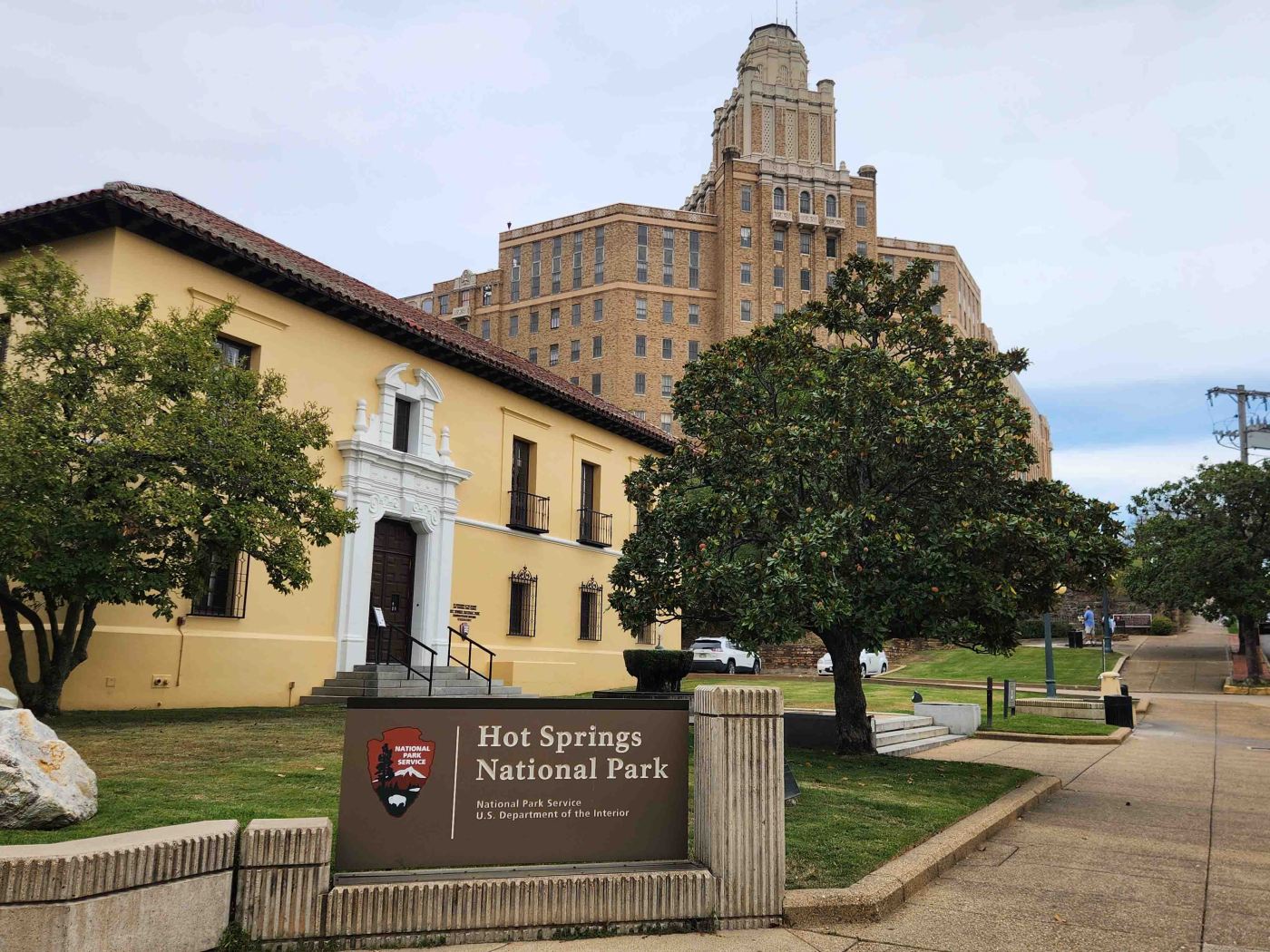
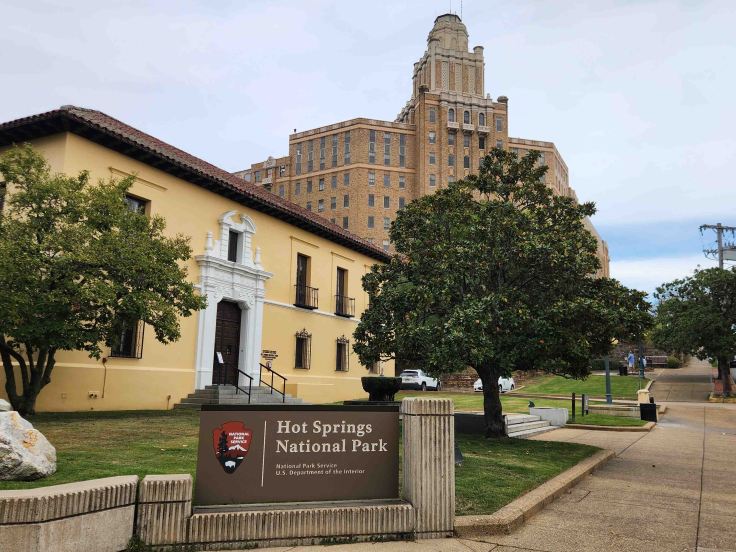
The Army-Navy General Hospital opened to patients in 1887 to capitalize on the hot springs’ therapeutic effects, and was the first joint service hospital in the nation. The original building was replaced in the 1930s with the towering brown brick, mortar and steel building you see in the photo. The 412-bed building rehabilitated patients through the 1960s and housed other administrative functions until being completely abandoned in 2020. The 20-acre campus has become something of a “lawless camp” in the ensuing years, but recent pushes for funding may bring new life to the main hospital and accessory buildings listed on the National Register of Historic Places. (Sentinel Record)
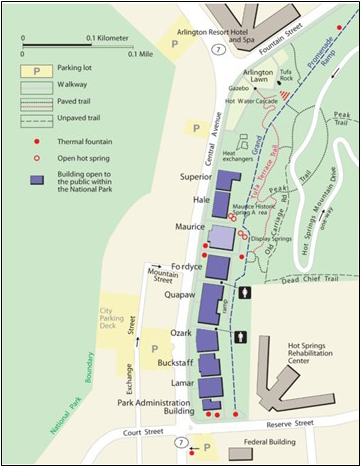
Prior to the late 1890s, the buildings along Bathhouse Row “were crude structures of canvas and lumber, little more than tents perched over individual springs or reservoirs carved out of the rock.” In the name of public safety, the federal government stopped renewing leases for fire-prone wooden bathhouses along Hot Springs Creek in the early 1900s, which resulted in the stone and brick structures now seen along Central Ave. (NPS website)
Present-day Bathhouse row buildings were built between 1892-1936, and have been restored to continue to function as bathhouses, or as museums, restaurants, hotels, and administrative offices. I stayed in the Hale, the oldest surviving bathhouse on the row (built in 1892). My room had a huge tub for soaking in the hot spring geothermal mineral water, piped hot directly into the tub through the faucet 😊
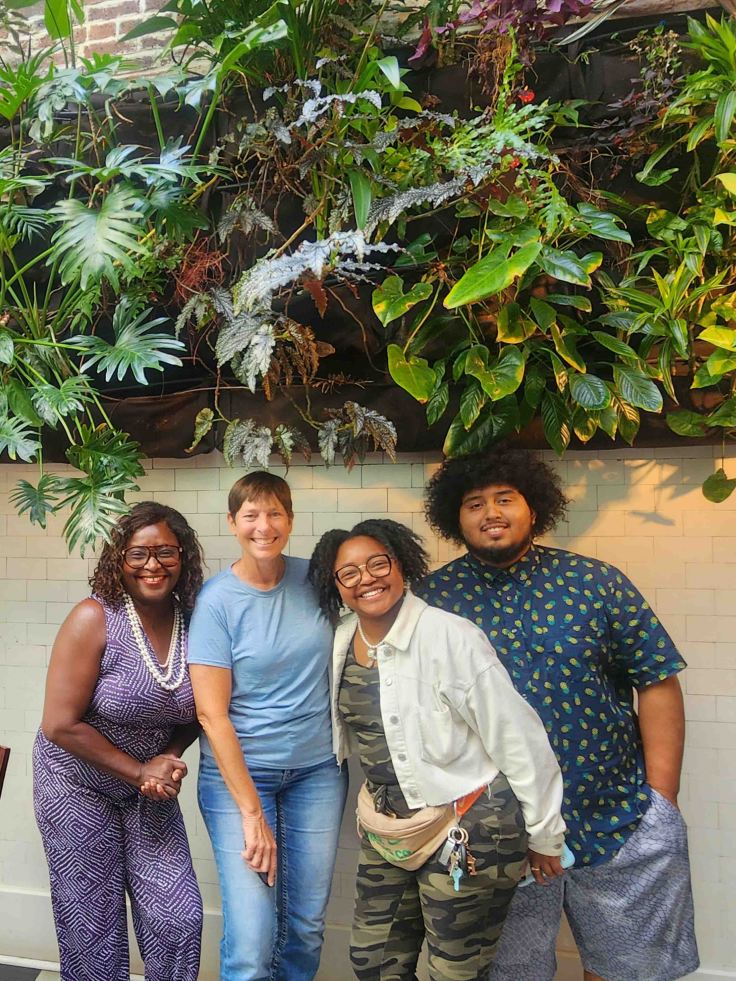
There was no shortage of tasty food to be had along Bathhouse Row. I had this delicious salmon benedict at Eden, a restaurant inside the Hale that features a dining area under a huge skylight and next to a living wall of plants. The Superior, bathhouse next door to the Hale, is the only brewery in a national park, brews beer (and rootbeer!) with thermal spring water, and boasts an impressive food menu that can be enjoyed outdoors on their patio. Yum!
I love to people-watch while I’m eating alone. I don’t know why, but it’s strangely entertaining to see how uncomfortable people are with seeing how comfortable I am dining solo 😊 At breakfast one morning, I glanced over at the family seated at the table next to me and noticed they were obviously celebrating a milestone, and made a mental note to offer to take their picture to capture the moment at the end of the meal. Before I knew it, the matriarch of the group, Sabrenna, waved me over to join her, Hannah and Bernard for her birthday brunch. The waiter took this photo of us in front of the Eden living wall. Later at dinner, a couple seated next to me had noticed me in riding gear earlier in the day and were eager to talk bikes and rides. They were bikers from Texas, so we had a lot of common routes to chat about. There’s always connections to be made over meals, if you’re open to it.
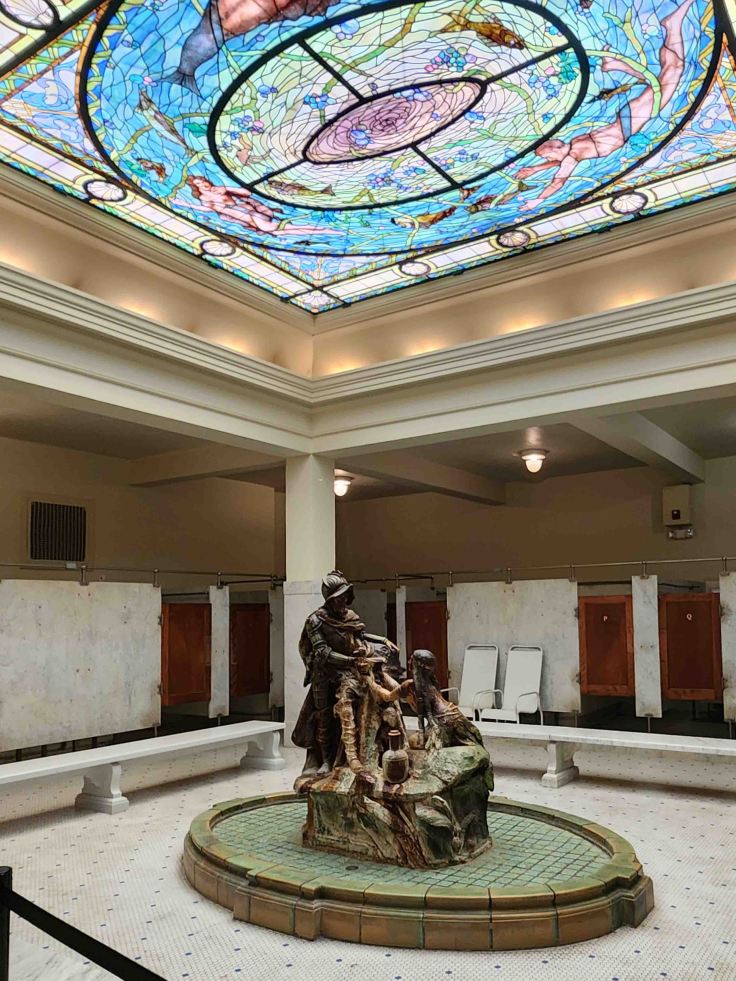
Central to the perceived therapeutic benefits of the bathhouses was a holistic approach to health – body, mind, and spirit. Colonel Samuel Fordyce, a civil war veteran who believed that the curative powers of the areas mineral baths saved his life, incorporated many disciplines into the bathhouse he built. Marbled floors and walls, stained glass skylights, elaborate recreation areas, and rooms for hot bath, massage, and sauna represented the golden age of spas and bathing at the Fordyce Bathhouse from 1914-1962. The stained-glass skylight with Greek motifs over the DeSoto fountain in the men’s bathing lobbing illustrates the intended majesty of the time. The building now serves as the National Park Visitor Center and Museum.
According to an on-site placard, the Fordyce Bathhouse employed a “physical culture director” to supervise the gymnasium, offer instruction, and guide the therapeutic exercises using parallel bars, climbing ropes, punching bags, clubs, medicine balls, and other equipment that can still be found in modern day fitness and training facilities.
The health and wellness culture of the hot springs and bathhouses included what was known as the “terrain cure.” Created by German physician Max Joseph Oertal, this therapeutic regimen included graduated hiking and climbing on nature trails on the mountains adjacent to the bathhouses and hospital. The varying difficulty of the trails emphasized developing health through exercise. One of the trails leads to the third iteration of an observation tower originally built in 1877. The current version of the Hot Springs Mountain Tower, built in 1983, stands 216 ft tall with a commanding view of 140 square miles of mountain terrain. In addition to trails, there’s a wonderfully twisty road leading up to it!
With several days of relaxation and off-bike sightseeing under my belt, it was time to explore more of Arkansas.





 FitHippie Adventures
Leave a comment