With most of my preferred hotel chains booked up in Homestead (no available Bunk-a-Bikers), I rode a few more minutes south to the southernmost municipality in the state, Florida City. This ended up being the perfect location from which to explore three national park units I hadn’t yet visited – Biscayne and Everglades National Parks and Big Cypress National Preserve. Together, they are part of the Everglades Ecosystem.
Billed as the “Gateway to the Florida Keys and Everglades,” Florida City is conveniently positioned between three National Park Service units and the beginning of the Florida Keys Scenic Highway. It’s so close to the city of Homestead that it’s hard to distinguish the boundary between the two cities.
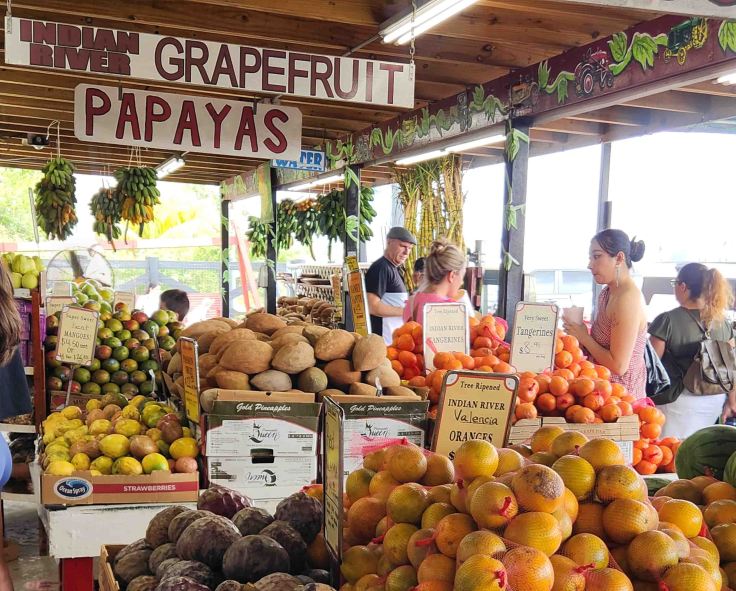
Labeled as “The Disney World of Fruit Stands” by VisitFlorida.com, Robert Is Here Fruit Stand and Farm in Homestead is part amusement park, part exotic fruit purveyor, and part restaurant – basically the perfect recipe for a unique roadside attraction! Known for their tropical fruit milkshakes, I paired one made with a fruit I had never tried, a mamey sapote, with a Cubano sandwich.
“Florida’s most famous produce stand was started when Robert’s dad, a farmer, set up a coffee table on the side of the road, loaded it with cucumbers, and erected a sign pointing in the direction of a small boy. “Robert Is Here,’’ said the sign. The year was 1959. Robert was 7. In the 21st century, Robert is here still.” (VisitFlorida.com)
With 95% of Biscayne National Park covered by water, I decided that I needed to visit this park by boat and booked an afternoon of snorkeling through the Biscayne National Park Institute. According to the NPS website, the park is made up of four primary ecosystems: a fringe of mangrove forest along the mainland shore, the southern expanse of Biscayne Bay, the northernmost Florida Keys, and the northernmost portion of Florida’s Coral Reef, the third largest reef in the world.
The boatway between Dante Fascell Visitor Center in Homestead, and Elliot Key via Biscayne Bay is a well-labeled and well-traveled path. Notice the line of markers and boat in front of the bow of the yellow Zodiac watercraft I was riding in.
The wind was too high for our guide to safely take us around Elliot Key to snorkel amongst the coral reefs, so we anchored on the bayside of the Key, where the water was calmer. I saw random patches of red and blue coral, as well as a few fish and sea grass. Although not as exciting as the coral reefs, it was still a great day in and on the water.
My next sightseeing adventures were Everglades National Park and Big Cypress National Preserve.Since the sites are so large and interconnected, I visited the south portion of Everglades one day, and the next day rode Tamiami Trail (US-41) through northern Everglades/southern Big Cypress. “The ecosystem [of these NPS sites] functions as a giant water purifier, filtering and cleaning water that drains from farms and impervious surfaces before reaching Florida Bay and the Ten Thousand Islands. [It] also contributes to South Florida’s climate resilience, naturally absorbing the impacts of hurricanes and minimizing coastal erosion and flooding.” (Natl Parks Conservation Assoc)
The Everglades ecosystem once stretched across a mosaic of wetlands and subtropical wilderness from Lake Okeechobee (large lake at top center of map) all the way to Florida Bay (the enclosed water area at bottom of map). Due to draining the area for farms and urban development since the mid-1900s, only about half of the ecosystem survives.
“The Everglades is a complex mix of salt and freshwater wetlands, hardwood hammocks, and pine rocklands that support a wide variety of flora and fauna, such as this bromeliad growing on the tree. (Natl Parks Conservation Assoc)
I rode the full 38-mile stretch of Everglades NP Main Park Road (from Ernest F. Coe Visitor Center in Homestead, to Guy Bradley Visitor Center in Flamingo), and the 38-mile stretch of Tamiami Trail/US-44 (between Shark Valley and Nathaniel P. Reed Visitor Centers). During the 2 days that I took to explore these routes, it soon became apparent that I would be able to see much of the parks from very well-maintained boardwalks and wouldn’t need to sacrifice a whole day to take a boat tour to see some of the unique habitats.
The Everglades ecosystem is home to hundreds of species of birds, such as the ubiquitous anhinga (in photo) and hundreds of threatened and endangered species, such as the American alligator and Florida Panther.
The boardwalk at Oasis Visitor Center in Big Cypress NP provided up-close opportunities to observe wildlife in their natural habitat, such as this stealthy, motionless alligator watching surrounding activity. This visitor center is also the southern terminus of the Florida National Scenic Trail, a 1,500 mile federally designated, non-motorized recreation trail that meanders between Pensacola and Big Cypress NP.
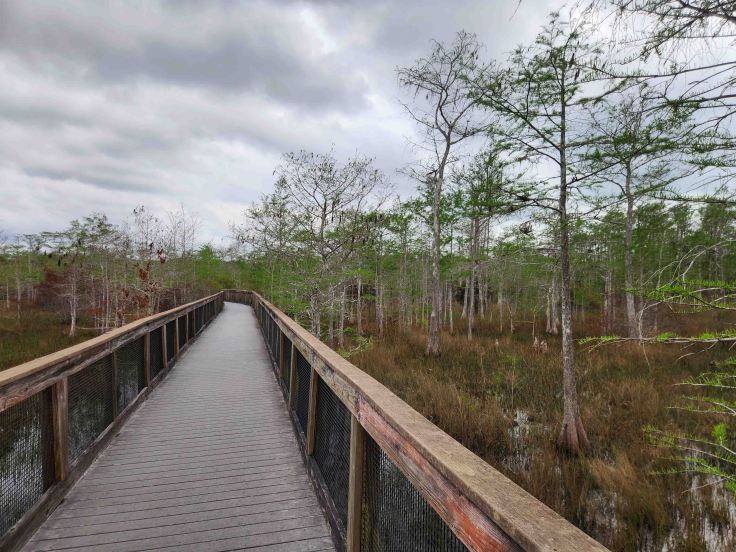
The boardwalk at H.P. Williams Roadside Park allowed me to walk through a great example of a cypress forest for which the preserve was named, as well as a section of the “river of grass” that filters all the water that passes through.
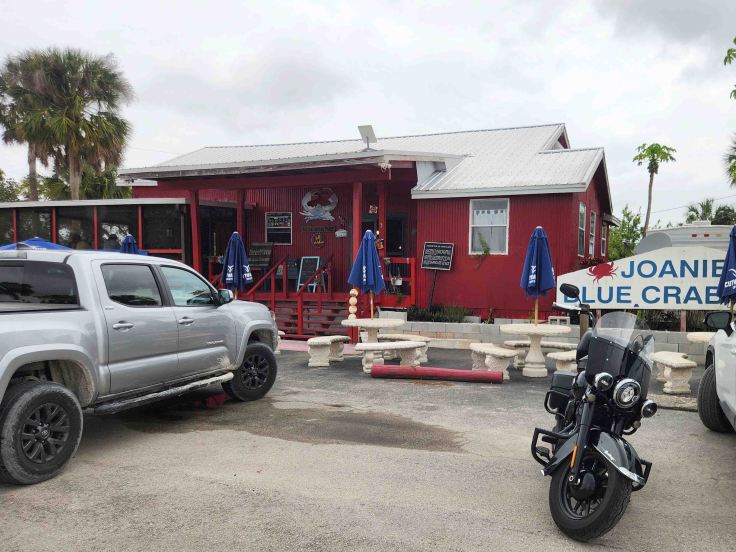
I stopped in at Joanie’s Blue Crab Café in Ochopee for a seafood lunch in the oldest standing building in the Everglades (circa 1928). A note on the chalkboard behind the register served to stave off any complaints about the menu option or price. I wish I would’ve taken a pic of it, but the gist of it was, if you don’t like what you see here, feel free to keep going. . . 66 miles to Miami or 42 miles to Naples. Joanie seems to have the only food game in town for quite a ways 😊
Of course, I had to get gator bites since I was in the Everglades! Paired with a grilled fish salad, it was a perfectly tasty, albeit quite expensive, local, roadside lunch.
Though the last native Miccosukee alligator wrestler retired in 2016, the Miccosukee Indian Village in the Tamiami Reservation is still worth a stop. The village celebrates the unique Miccosukee history and culture through a museum, alligator demonstrations, air boat tours, and a gift shop.
There was still so much to see in this area, but it was time to head south and complete my last corner. Key West, here I come!






 FitHippie Adventures
Leave a comment