
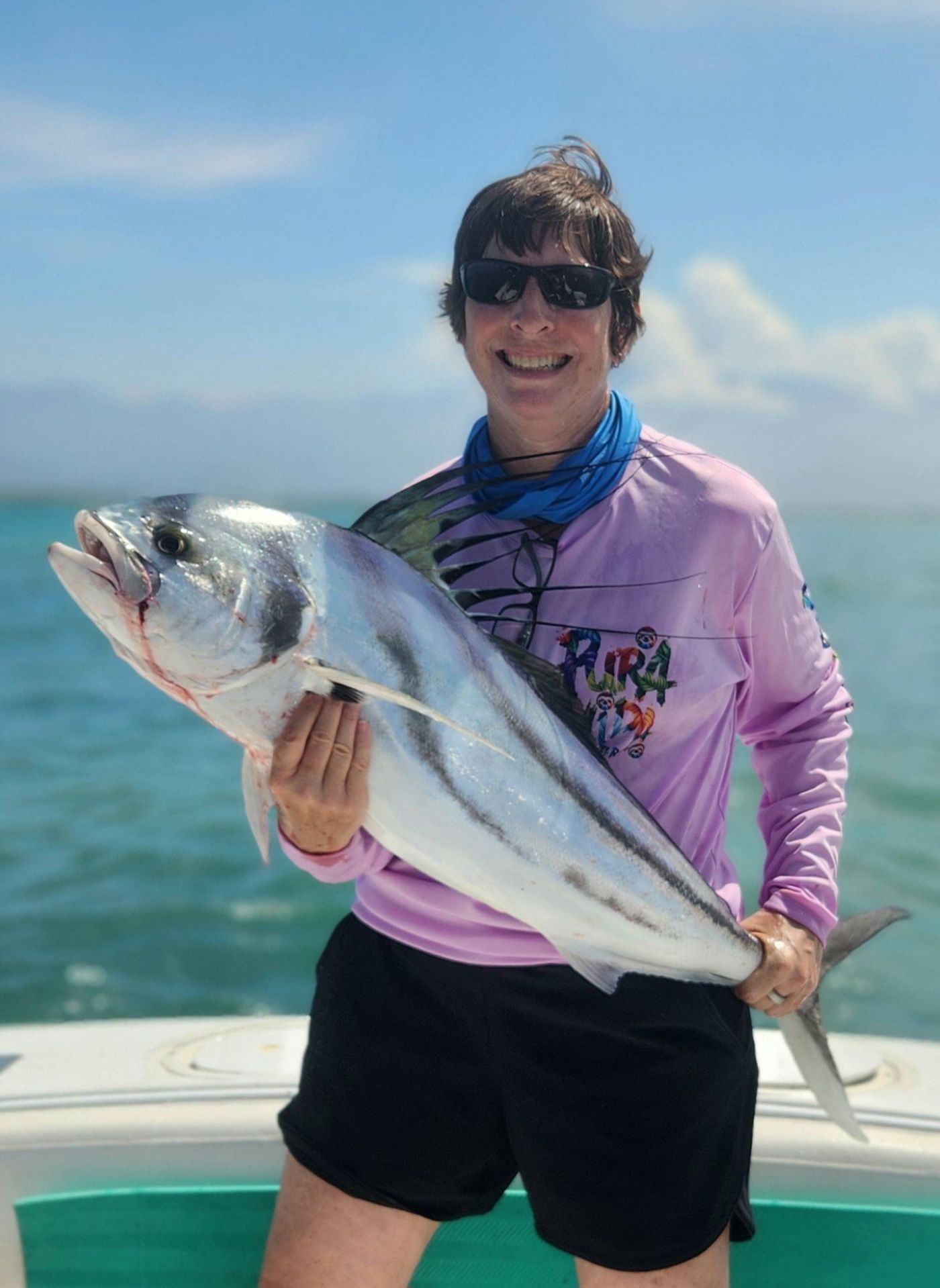
I’ve done so much since last time I posted that I’ll have to break all my excursions into multiple posts. A fishing trip was one of the highlights of this weekend, so I’ll start with that!
I decided to splurge and go on an inland charter fishing trip. Quepos is a popular fishing destination for both ticos (native-born Costa Ricans) and foreigners alike. Offshore fishing entices with the chance to hook a sailfish, marlin, yellowfin tuna, mahi-mahi, or wahoo. It takes an hour and a half to get offshore for those prizes though, so I decided on a half-day inshore trip to fish for rooster fish, jack crevalle, snook, Spanish mackeral, red snapper, and grouper. Plus, I didn’t want to just sit there watching a rod and reel parked in a holder on the boat while we trawled, I wanted to actually hold the line and feel when a fish took the bait, which doesn’t happen during offshore fishing.
The travel services associated with the school I attend, Maximo Nivel, uses Quepos Fishing, which is based out of Marina Pez Vela, the marina in Quepos. The docks opened in 2014 and is now a world-class marina, yacht yard and commerical development.

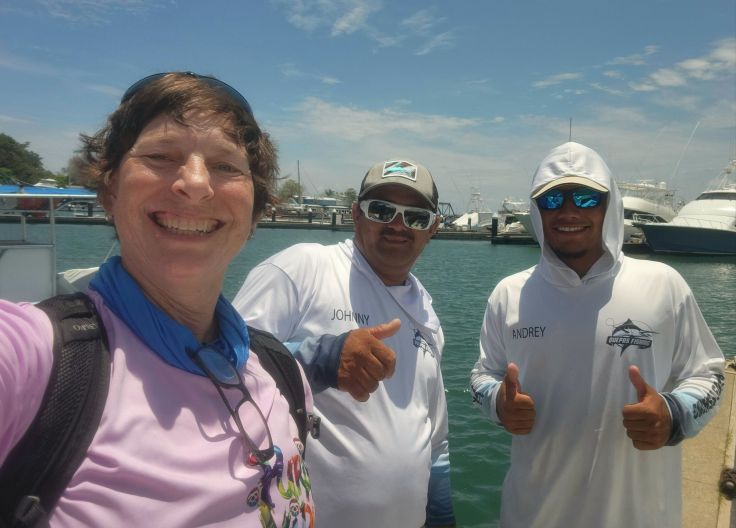
After purchasing a fishing license and being escorted to the Isabella, I met the boat captain and mate. Johnny, and his son Andrey both spoke English well, but helped me practice my Spanish by speaking in their native language as much as I could handle.
We started the morning by fishing for bait fish not far off a local beach. We caught a few sardines and palomela to entice larger fish onto my hook further out. While seeking bait fish, Andrey’s line went taught, so he handed it to me to reel in. As I got it closer to the boat, it was obvious that the needle fish had been inadvertently hooked in its side instead of having taken the bait. Not good for eating, the unlucky needlefish experienced a stroke of good fortune by becoming a catch-and-release.

With over 30 years of experience as a fishing guide, Johnny guided the boat to the reefs near Olocuita Island off the shore of Manuel Antonio National Park. There were a few other boats out there, but from radio communications, Johnny confirmed that I was the only one that caught fish that day. Definitely more a testament to his guiding skills than to my fishing ability!

The waves were pretty big, but they were rolling at a long enough interval that the water didn’t feel choppy. The boat was rocking enough though that it was hard to keep my balance without bracing a leg against the side of the boat or holding on, but it was a gorgeous, sunny day with a good breeze – a perfect day on the water. After they saw that I wasn’t squeemish around the fish, and realized that I wasn’t going to get seasick, they asked me about my fishing experience. I had only been ocean fishing once in my life prior to this experience. I caught a 20-lb baracuda in the Indian Ocean while deployed to the island of Diego Garcia, but that was over 30 years ago. The rest of my fishing experience was with my dad, as a kid, plying South Louisiana waters for speckled trout and rat reds. I love being in a boat, feeling the spray of the water on my face and smelling the brackish or salty air around me. The water is definitely my happy place.

Before leaving the house for my fishing trip, I had asked my hosts if they wanted me to bring home any edible fish that I caught. Carmen, who used to work on charter fishing boats in her younger days, said “absolutely!” Andrey gutted the red snapper and packed it in ice in a garbage bag for me to transport back to my hosts. Other than the bus, walking is my only mode of transportation here, so I grabbed the bag and started hoofing it. I was grinning ear to ear as I walked the mile from the marina to my host’s house triumphantly carrying my black trash bag with my fish snugly iced down for later consumption! Carmen hasn’t cooked it yet, but I’ll keep you updated on how it tastes when she does.
Off to the next adventure!
 FitHippie Adventures
Wowza. Good catches.
LikeLiked by 1 person
What wonderful adventures you’re having! Love this!!
LikeLiked by 1 person