
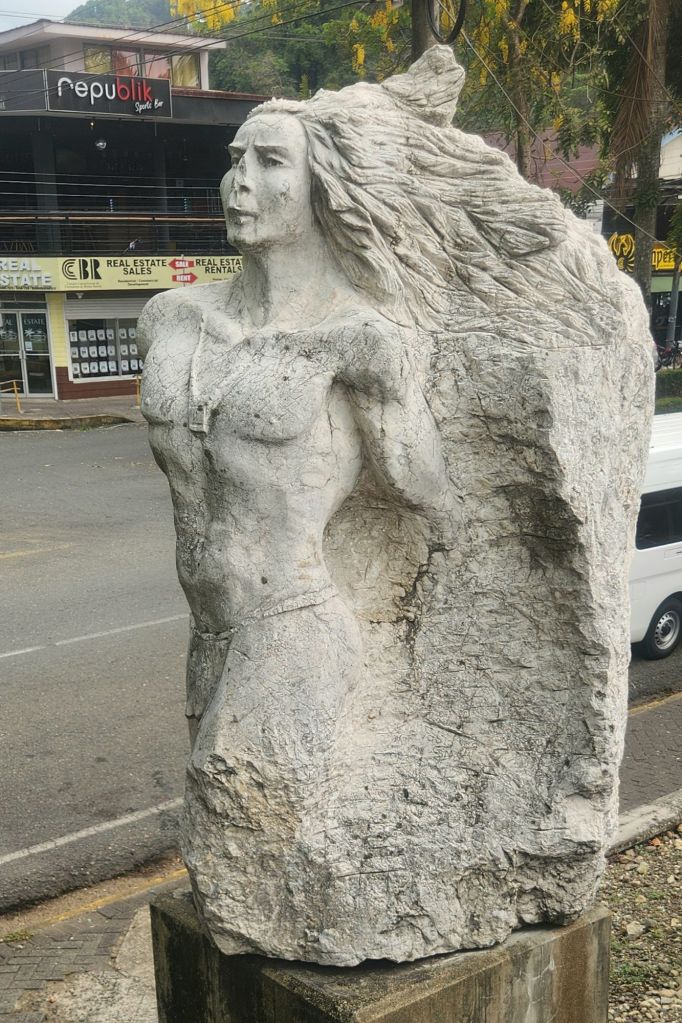
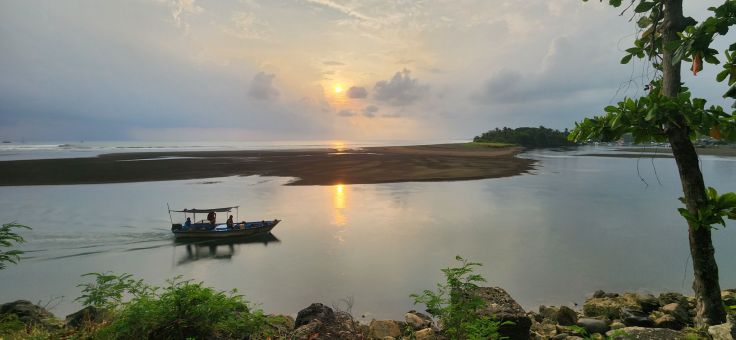
It’s time to introduce y’all to the town I have been calling home for the last month – Quepos. With a population of approx. 33,000 people, and covering roughly 500 square miles of area, it’s a small harbor town that serves as the gateway to the popular tourist destinations of Manuel Antonio beaches and National Park. (CityPopulation.de) First inhabited by the native Quepoa, which several locals have told me means “water people,” the Spanish made contact with this area in the 1500s, but it wasn’t until the mid 1700s that they started to colonize it.
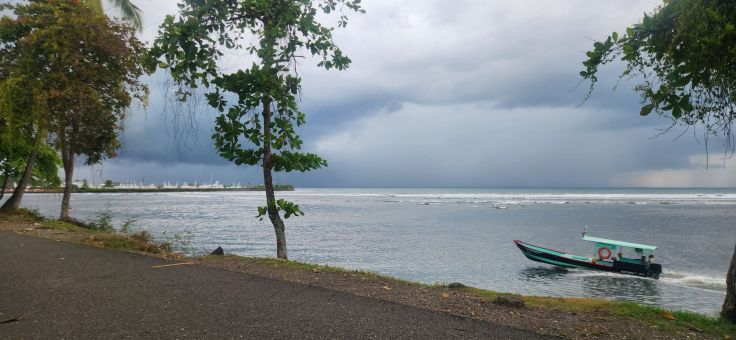

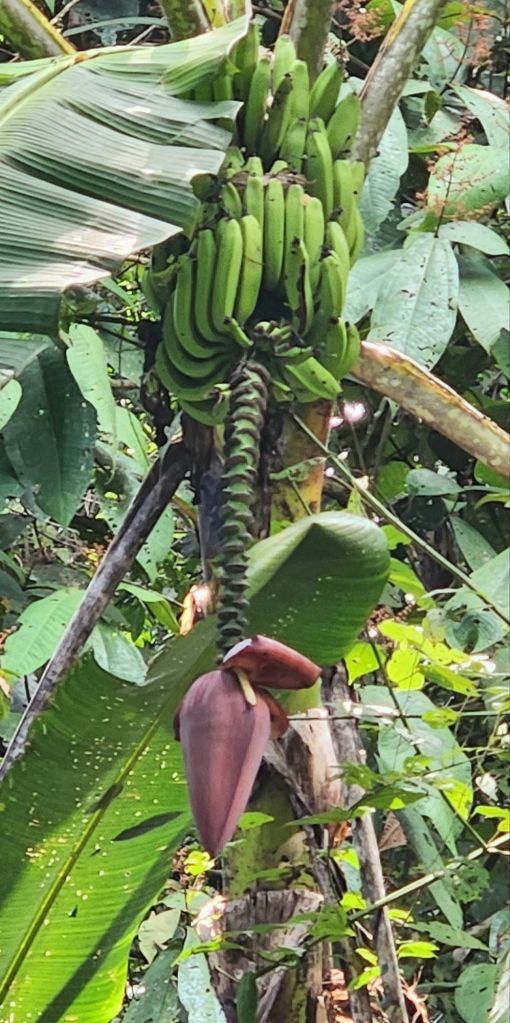
By the late 1800s, there was a global appetite for the once exotic fruit of bananas. There is disagreement as to exactly how and when this non-native fruit made its way to Central America, but it is generally accepted that it was probably brought over from Asia or Africa by the Spanish and Portugese in the 15th and 16th centuries. However, it wasn’t until the 1930s that locals started to capitalize on the commodity as an export. The American owned United Fruit Company (later to be known as Chiquita) took over local banana operations in the 1930s and expanded it by clearing massive swaths of mangroves. The company established what is currently known as the town of Quepos by building offices and housing for management and laborers, in addition to mass acres of banana crops. Soon, Quepos became a major banana export city via its port and railroad that ran along the waterfront.
On varies tours I’ve taken, the guides have referred to this area as having started off as a “Banana Republic.” I had heard the term before, but never really knew what it meant, so I looked it up. “The phrase was first coined by American author O. Henry in 1904, used to describe a fictional country heavily dependent upon banana exports, excessively influenced by U.S. banana companies. The term evolved to encompass any Central and South American country with similar economic and political dependencies, often characterized by instability and corruption .” (Britannica) Often, the sterotypical instability and corruption were the direct result of U.S. financial interests and govenment involvement. Costa Rica has evolved from a Banana Republic cliche into a stable, military-free democracy fueled by tourism and electrical exports (medical and aerospace devices), in addition to agriculture. (SIS Int.)
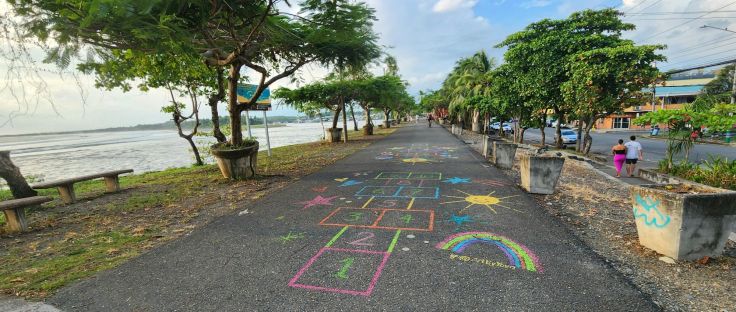
With the famous beaches and National Park of Manuel Antonio just 20 minutes away, Quepos serves more as a jumping off point than a final tourist destination. There are modest hotels and restaurants in this small town, but most tourists come for the swanky resorts and high-end restaurants geared towards Americans and Europeans in Manuel Antonio. That’s OK by me, I much prefer the small-town feel and daily rhythm of Quepos to that of Manuel Antonio. Most vendors here can speak English, but in my experience, folks not directly related to the tourist industry do not. Bilingual or not, most people I encounter during my days greatly appreciate my attempts at Spanish. It’s not uncommon for a tico (native Costa Rican) to join me when I am sitting on a bench at the waterfront to strike up a conversation. Usually, it’s to guess where I am from -there’s no hiding the fact that I am a gringo, or non-native Latin American. The ensuing conversation is often a mix of passable English on their part, and humorous attempts at Spanish on my part. Always a fun conversation 🙂
OK, I’m off to class! More to come . . .
 FitHippie Adventures
Leave a comment