I had been hearing about the beauty of the Hudson River Valley for years from my good friends Josephine and Glenn, so I decided to check it out for myself. I chanced upon a last minute stay at a quaint old school motel called the Roosevelt Inn in Hyde Park, New York. Centrally located for the sights I wanted to visit, it was the perfect place to create a home base for a few days.
Just north of Poughkeepsie, New York along the Hudson River, Hyde Park boasts the homes of Franklin and Eleanor Roosevelt, as well as the the Vanderbilt Mansion and the main campus of the Culinary Institute of America.
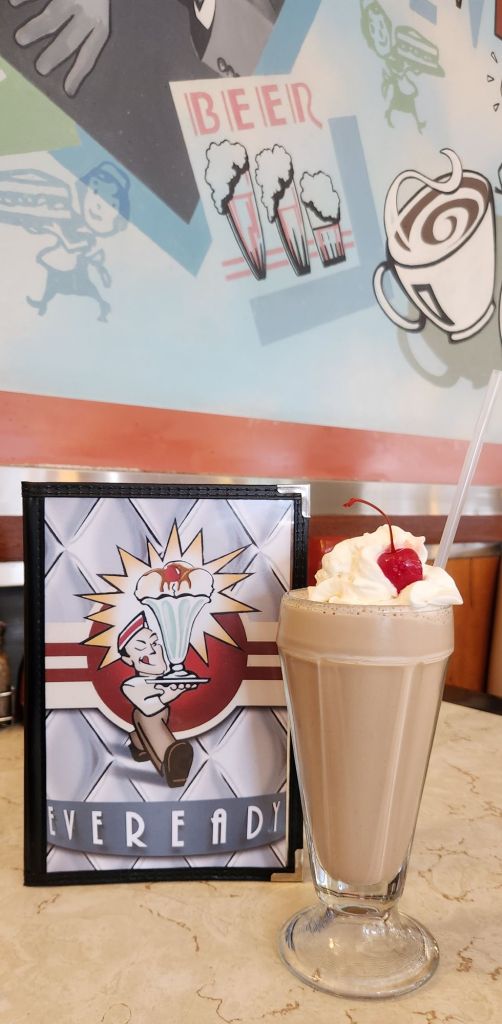
The motel was walking distance from this great diner, the Eveready. Though built in the 60s, this chrome Art Deco style building would be right at home in the 1950s. Once featured on Guy’s Diners, Drive-ins and Dives, the food lived up to the restaurant’s reputation!
I chose to walk the one mile from the motel to the diner to help balance out this old fashioned milkshake (made with three scoops of real ice cream) that I knew was going to happen once I got there 😀
Vanderbilt and Roosevelt Mansions
The expansion of industries such as tobacco, railroad, steel, and oil, coupled with the lack of governmental regulation and personal income tax in the 19th century, resulted in the Gilded Age (the period following the Civil War to the turn of the century). The term Gilded Age was coined in 1873 by Mark Twain and Charles Dudley Warner. “The term refers to the process of gilding an object with a superficial layer of gold to improve its appearance. Established millionaires viewed nouveau riche families like the Vanderbilts, who flaunted their wealth by building ostentatious homes, throwing extravagant balls, and using their money to buy social prominence, as gilded – all show, no substance.” (NPS brochure)
The wealth amassed, or inherited, by the elite class during the 1800s went on full display where this very small percentage of the population built opulent mansions. To show off their fortunes and status, families like the Vanderbilts, Carnegies, Roosevelts, Rockefellers and others, constructed homes that imitated European palaces.
I took a guided tour of the 45,000 sq ft Vanderbilt Mansion that sits high above the Hudson River. The six-floor, 54 room Beaux-Arts style mansion served as the fall and spring country retreat for Frederick William Vanderbilt and his wife Louise. With no children to leave their mansion to after their passings, Louise’s niece inherited the mansion. On the advice of her neighbors, the Roosevelts, she donated the estate to the National Park Service after she was unable to find buyers for it.
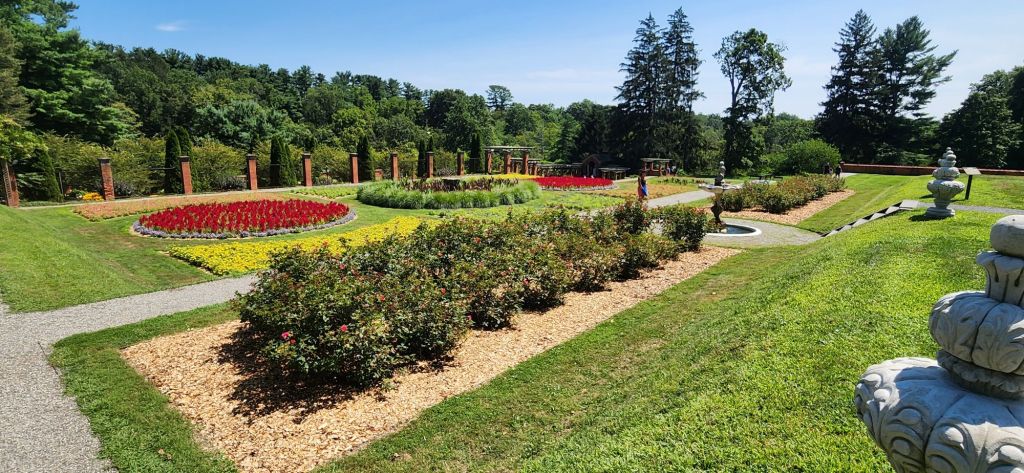
The estate landscape predates the Vanderbilts, and was “designed in the European picturesque style with exotic plants, formal gardens, and greenhouses. The Vanderbilts redesigned the formal gardens and planted hundreds of trees and shrubs. Today, the landscape, restored to its 1930s appearance, encompasses five acres of tiered gardens, gravel paths, shady arbors, ornate statues, and bubbling fountains.” (NPS brochure)
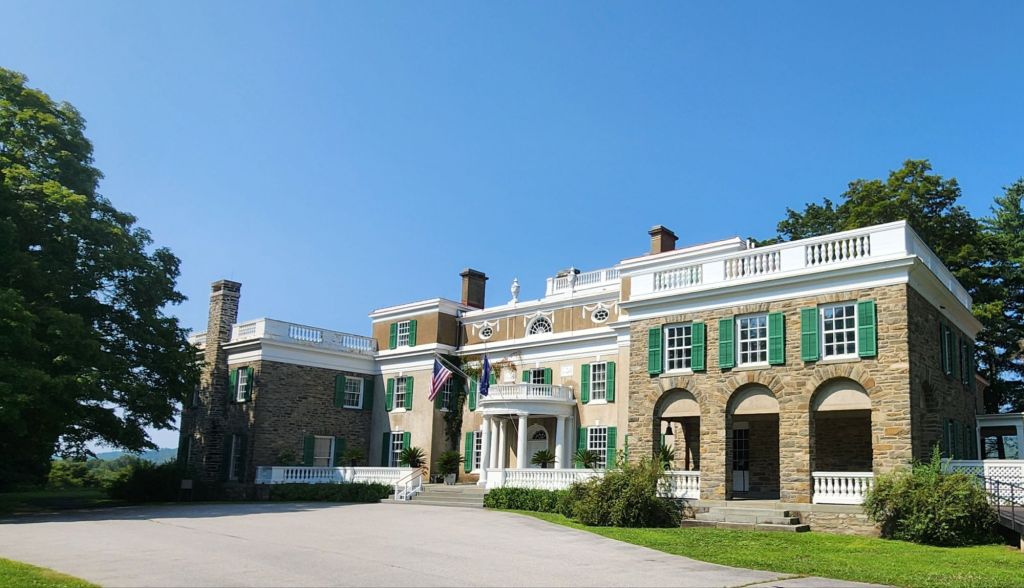
Just down the road from the Vanderbilt Mansion is the Home of Franklin D Roosevelt National Historic Site. Franklin D. Roosevelt was born in this house overlooking the Hudson River. The place where he grew up riding horses and sailing the Hudson became one of his and Eleanor’s residences in 1905, the other being a Manhattan townhouse in New York City.
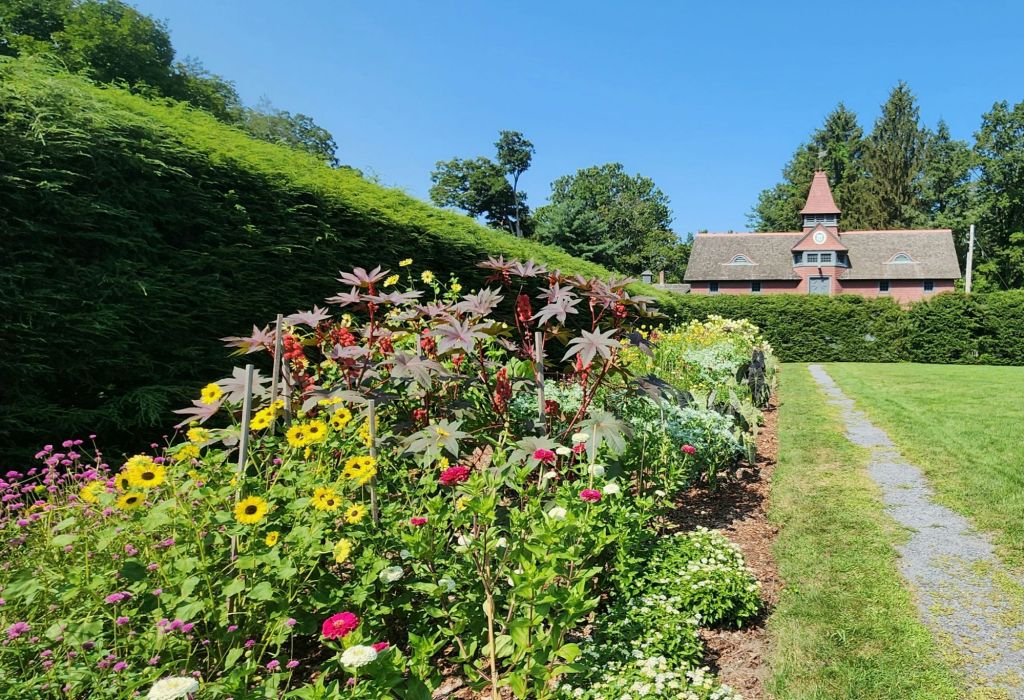
Franklin and Eleanor’s love of nature is seen all around the estates through beautiful flowers and numerous trees. The couple are buried on the grounds in the family’s formal garden, right next to this barn. Franklin would translate his love of nature into a New Deal Program during his presidency, the Civilian Conservation Corps (CCC). Between 1933-1942, CCC enrollees (of which my paternal grandfather was one), planted over three billion trees and built over 800 parks nationwide. (NPS brochure)
The tradition of presidents establishing a public repository to preserve the evidence of their Presidency for future generations began with Franklin D. Roosevelt. The FDR Library & Museum on the grounds of his home was the first in a system of what is now sixteen Presidential Libraries. The exhibits were full of examples of Franklin and Eleanor’s strong partnershipand of how she redefined the role of First Lady.
Two miles from the “big house” of the Roosevelts in Hyde Park is Val-Kill, the cottage FDR helped design for Eleanor. This was her permanent residence after FDR’s death in 1945, and the site of her furniture-making business, Val-KiIl Industries – a socially-conscious venture with her friends Marion Dickerman and Nancy Cook, who also lived on the grounds. Eleanor used the site for informal diplomacy and her work as a writer and activist until her death in 1962.
Catskill and Woodstock
Although the Hyde Park homes and mansions were aesthetically pleasing, it was hard for me to look past the over-the-top decadence of an elite few when the average income in the U.S. was around $380, well below the poverty line. Both Frederick and FDR leveraged their wealth and status through charitable giving and public policy agendas, respectively, but it’s still difficult for me to wrap my head around the resources needed to maintain these estates and lavish lifestyles. Especially while most of America worked very long hours, often in unsafe conditions, for low wages, never able to rise above the poverty level.
I decided to ride north out of Hyde Park to see other sites along the Hudson.
The Rip Van Winkle Bridge in Catskill, NY is named after a short story with the same name that mentions the Hudson and Catskill, published in 1819 by Washington Irving. The 1.5 mile cantilever and truss bridge carries NY-23 one hundred forty-three feet above the Hudson River.
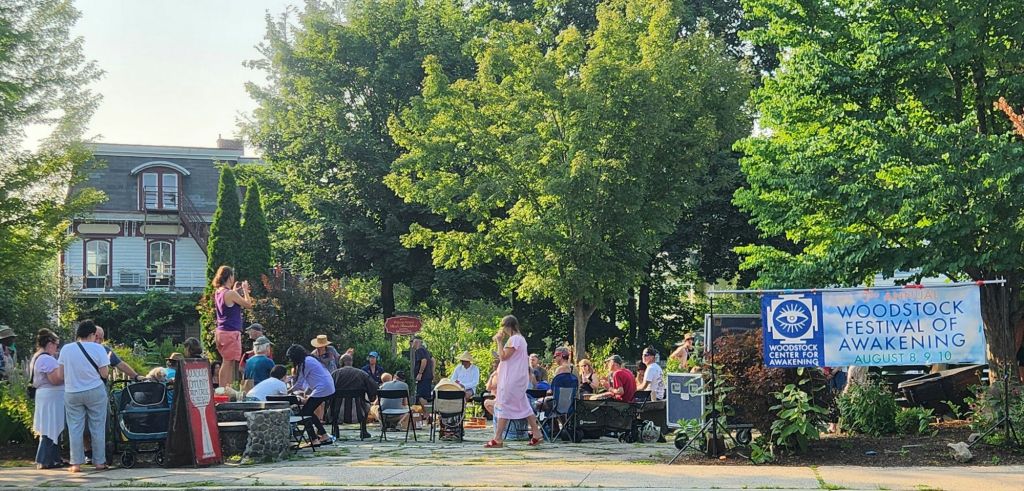
I toured the Thomas Cole National Historic Site while in Catskill, to see where the art movement known as the Hudson River School of American landscape painting started. From there, I rode down to Woodstock for a late lunch and was treated to the sounds of a community drum circle. The improvised, rhythmic pulsing of various types of percussion instruments provided an enjoyable musical backdrop to my outdoor dining experience.
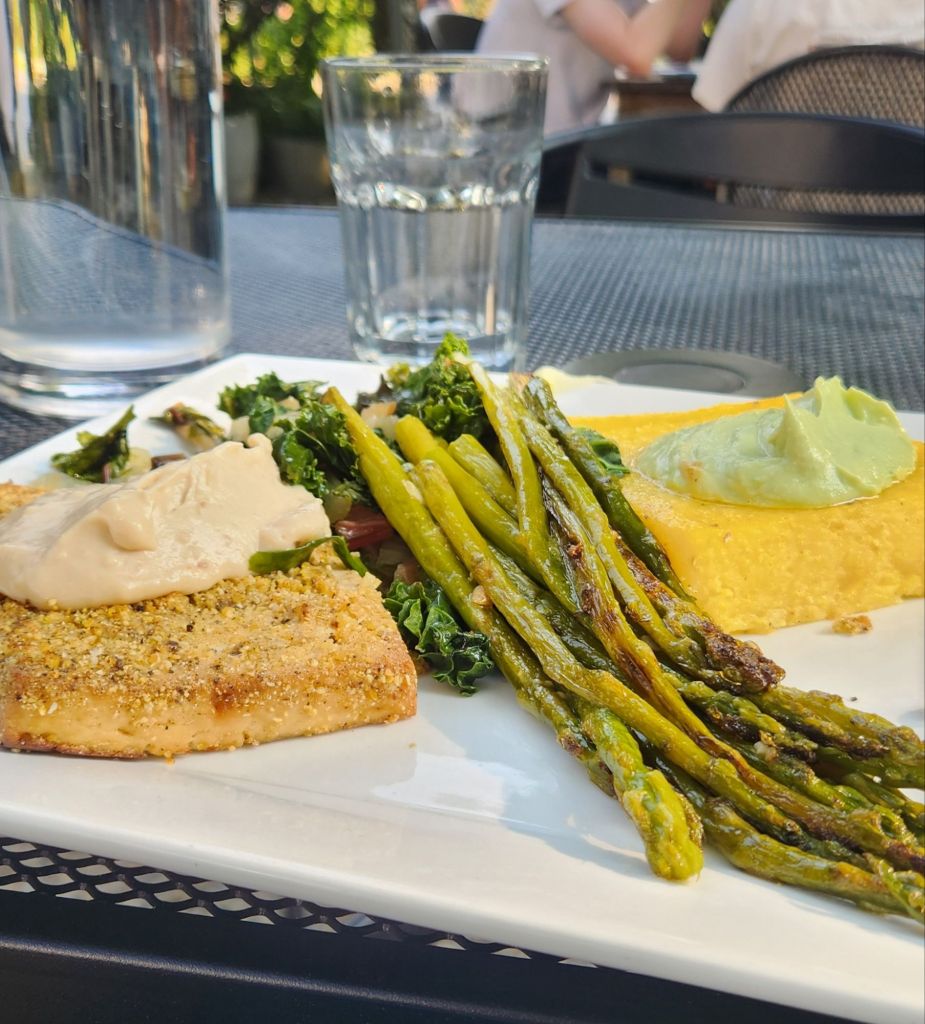
I opted for a vegan lunch at the Garden Cafe in Woodstock – black and white peppercorn crusted tofu with a roasted garlic sauce, polenta with avocado mouse and truffle salt, sauteed greens and asparagus. The fresh, organic food, eaten on a shaded patio with hippie vibes, was a welcome respite from the often limited dining experiences on the road.





 FitHippie Adventures
Leave a comment