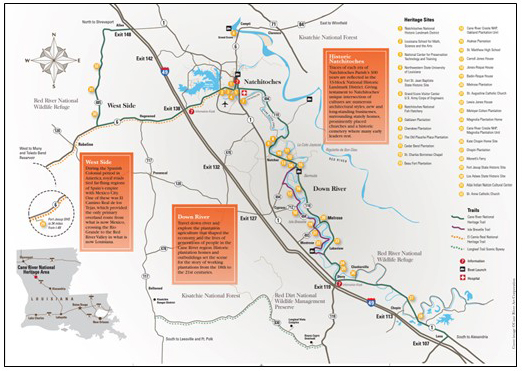
In central Louisiana, along a 35-mile stretch of the Cane River, lies the Cane River Creole Heritage Area. This zone of just over 100,000 acres extends from Natchitoches in the north to Monette’s Ferry in the south. This area encompasses “homes, churches, military posts, and agricultural land” which coalesce into the story of hundreds of years of history. The Cane River Creole National Historical Park, within the boundaries of the heritage area, focuses on the cotton years of Oakland and Magnolia Plantations.
Click on the map to go to a brochure that includes detailed descriptions of sites included in the Cane River Creole Heritage Area.
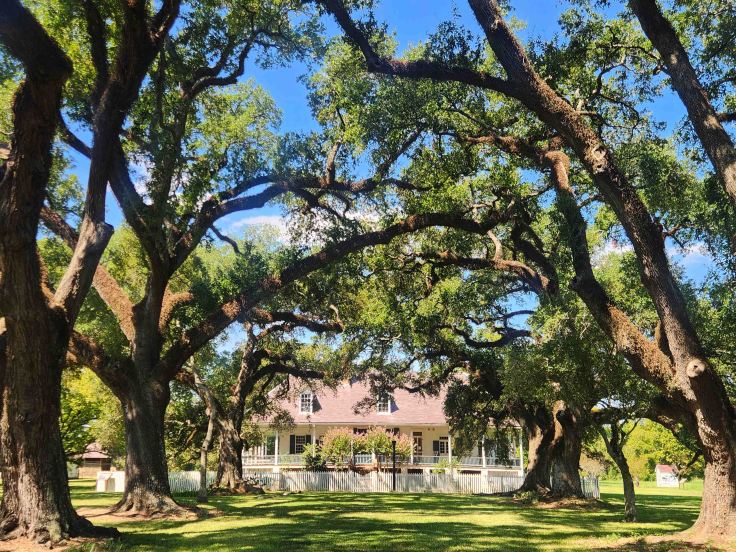
Bermuda Plantation, founded by the Prud’homme family in 1821, evolved from a small indigo and tobacco growing operation into a prosperous cotton plantation. By the Civil War, the Prud’homme plantation was sustained by nearly 160 enslaved individuals working in agricultural, domestic, and skilled carpentry domains. In 1873, Bermuda Plantation was divided amongst the family, with the house and land along the Red River (photo) being renamed Oakland Plantation. (NPS placards)
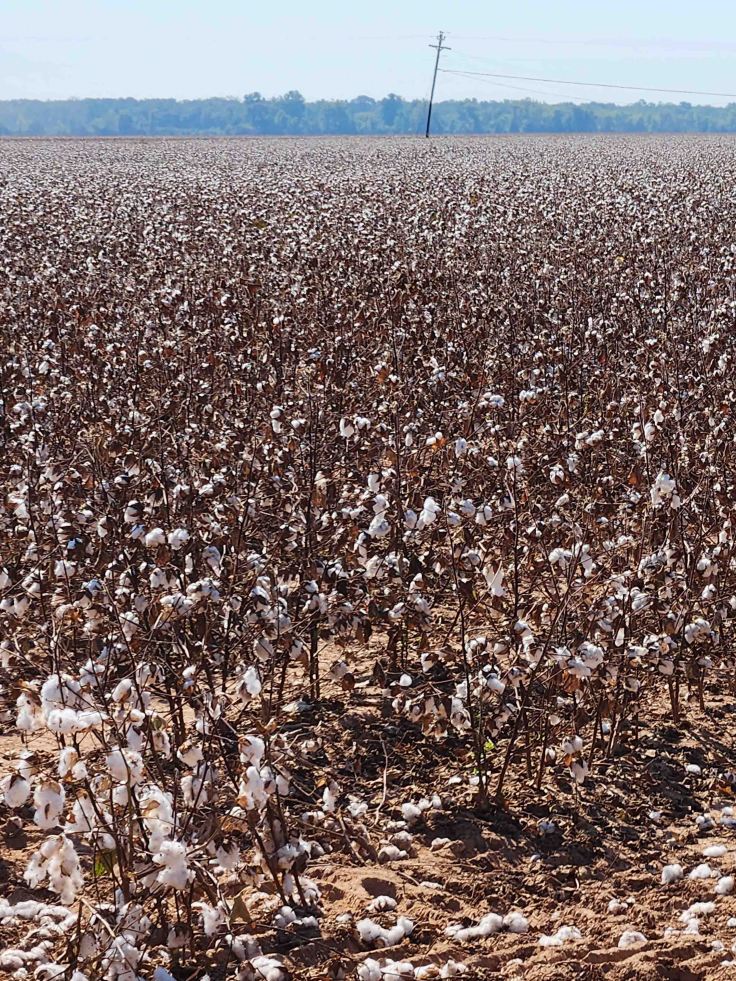
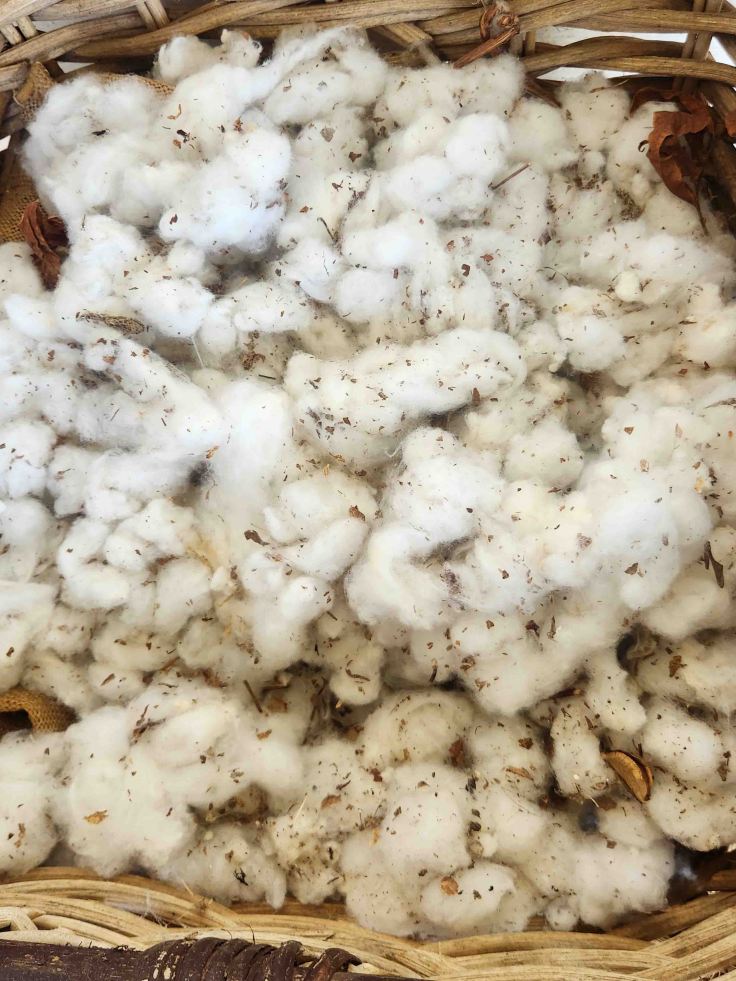
Unlike tobacco and indigo, cotton crops demanded year-round labor. “The cotton year began in March as workers plowed and planted the fields. After 2-3 weeks, they used hoes to chop or thin seedlings and remove weeds. They typically repeated this process four times over the summer.” In August, enslaved adults were expected to pick at least 200 pounds of cotton per day (child quotas were closer to 60 pounds), from dusk to dawn (and sometimes longer if there was a full moon), as the cotton bolls continually opened through the new year. The tasks of pulling and burning expended plants, mending fences and machinery filled up January and February. (NPS brochure)
The arduous task of continually bending to pick low cotton was made worse by hard, sharp bolls inflicting deep cuts on hands and forearms.
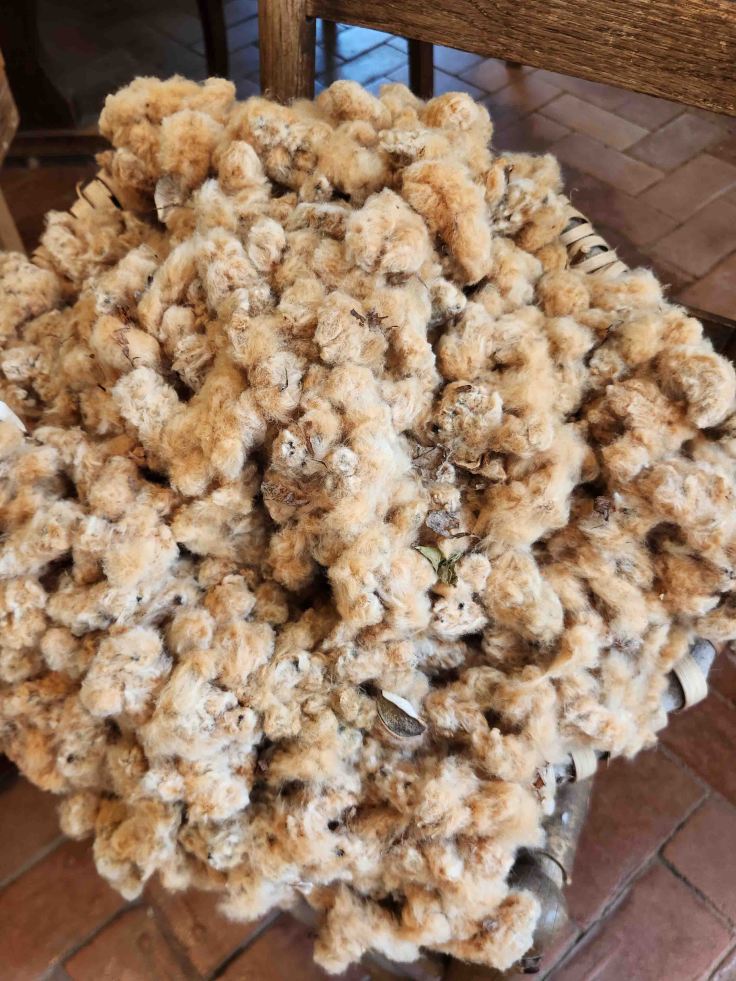
“Coton jaune, Acadian brown cotton, is an heirloom variety grown by the Acadians or Cajuns, the French settlers exiled from Nova Scotia by the English in the 1760s, who resettled in the bayous and prairies of south Louisiana. The Acadians, who were skilled in making fabrics from wool, adapted to raising brown cotton, a variety that originated in South America and made its way to Louisiana through Mexico and Texas. Fibers have natural tan shades and were traditionally used in handwoven blankets, bedding, and clothing.” This unique cotton is experiencing a resurgence among fabric weavers in Louisiana. (Northwestern State University of Louisiana)
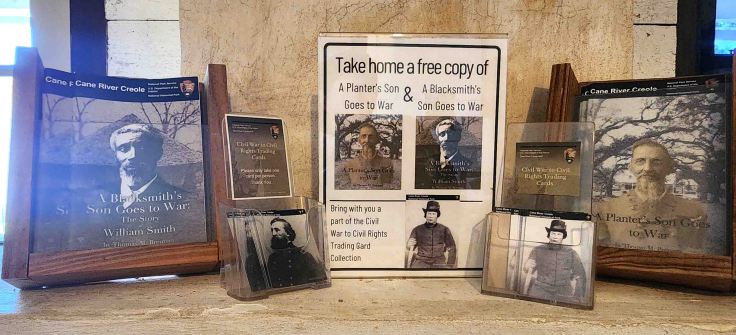
I was thrilled to see this offering in the plantation store of two tales of opposing experiences during the Civil War, both originating at the plantation. The planter’s son, Jacques Alphonse Prud’homme, marched off to war as a college graduate in civil engineering, accompanied by an enslaved servant who took care of his domestic needs. He fought in battles from Missouri to southeast Louisiana, and went home to his family’s plantation several times to convalesce from battle wounds. On the other end of the spectrum, was William Smith, a son of the blacksmith at the Prud’homme plantation. Risking lashings and death, he escaped the plantation and joined the Corps d’Afrique (black Union soldiers serving as engineers) when they marched through his area (“Louisiana contributed more black troops to the Union cause than any other state, with almost 1/3 of black males aged 18-45 joining the Yankee Army”). Smith fought in battles around the Red River area and was wounded. Captured by Confederate troops while convalescing on the move with his unit, he was taken back to the Prud’homme plantation, where he was again enslaved and labored for the remainder of the war. (NPS brochure)
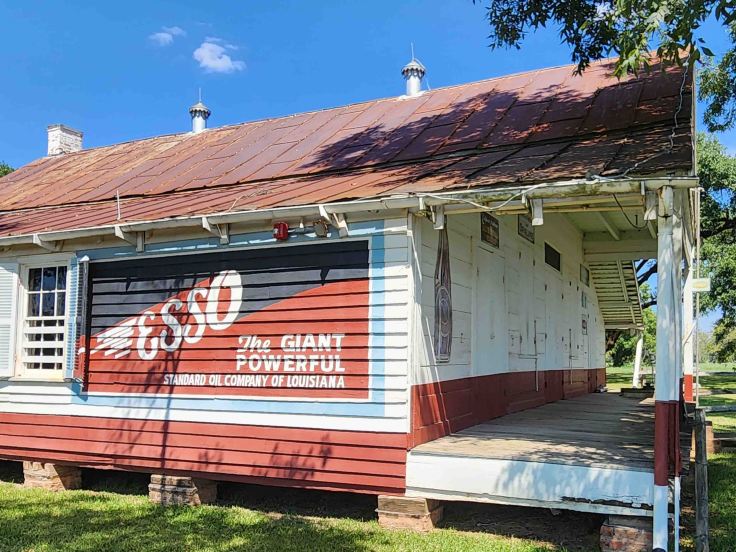
After the Civil War, previously enslaved individuals with specialized skills (for example, blacksmiths) could negotiate their own contracts for pay and hours. For those without artisan skills, or the resources to leave the area, accepting sharecropping arrangements was their only option. At Oakland and Magnolia Plantations, prior to the 1930s, sharecroppers and tenant farmers were paid with tokens, that could only be used at the plantation stores (Oakland Plantation store in photo). The combination of lack of competitive shopping options and overpriced goods served to keep formerly enslaved people in an endless debt to the plantation store, thus creating a virtual bondage. (NPS website and brochure)
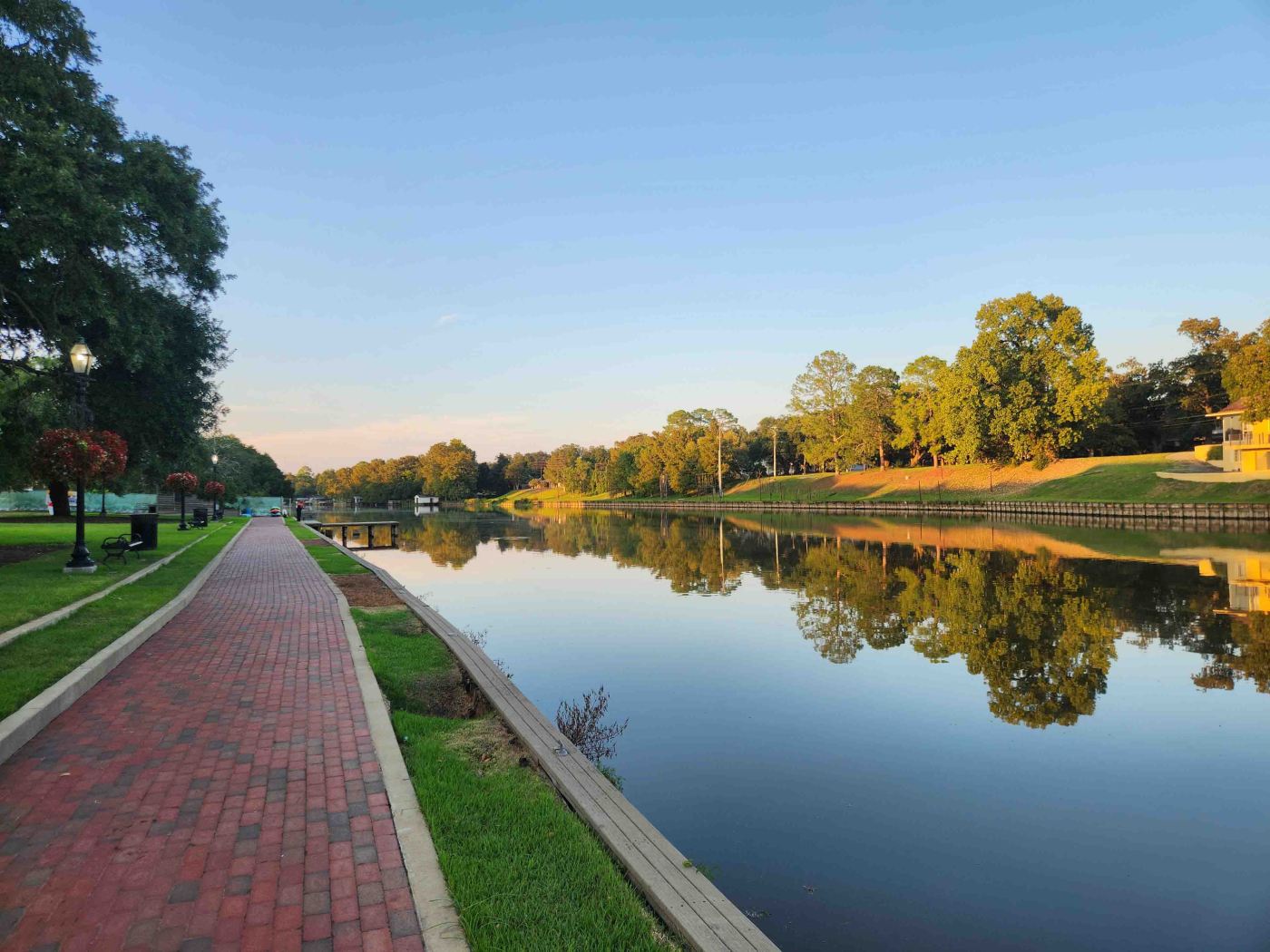
“Natchitoches, (Pronounced NACK-a-tish) the original French colony in Louisiana, is the oldest settlement in the Louisiana Purchase. Established in 1714, Natchitoches, retains its European flavor through its architecture, heritage and lifestyle.” The Cane River runs through the heart of the city and street signs bear French designations similar to those found in the New Orleans French Quarter. (Natchitoches.com)
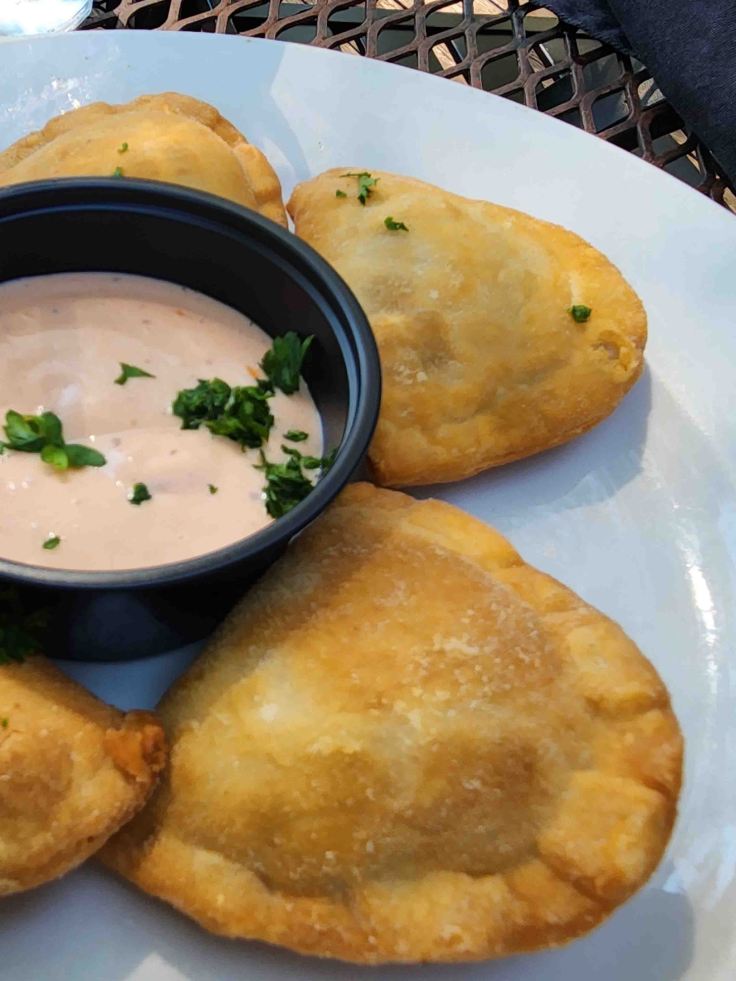
A mish-mash of indigenous, French, and Spanish cultures over the years, these balls of ground beef and pork meat wrapped in dough and deep fried, these meat pies are an iconic symbol of Natchitoches cuisine.
Founded by a French Canadian, Louis Antoin Juchereau de St. Denis in 1714, Natchitoches became the first permanent European settlement in what would later become known as the Louisiana Purchase. When he stumbled upon the village of the Natchitoches Indians on the Red River (now the Cane River), he established a small trade presence there that evolved into a French military fort. This fort replica, built near the original site, was painstakingly produced using 18th century building techniques according to extensive archival research, and built with locally sourced pine trees and hinges and latches forged at a nearby foundry. (Louisiana State Park website)
After a visit to Grand Ecore Visitor Center, I stopped at Fort Jessup. With the official establishment of the western boundary solidified, the U.S. built this outpost to protect its border, whose first commander was Lieutenant Colonel Zachery Taylor. From 1822-1846, the place served as an important military frontier garrison. According to an on-site historical marker, “it was, for a time, the headquarters of all troops west of the Mississippi and was the concentration point for many troops for service in the Mexican War.” The fort was abandoned in 1846 when it was no longer needed as a border outpost once Texas was annexed. (Louisiana State Park website)
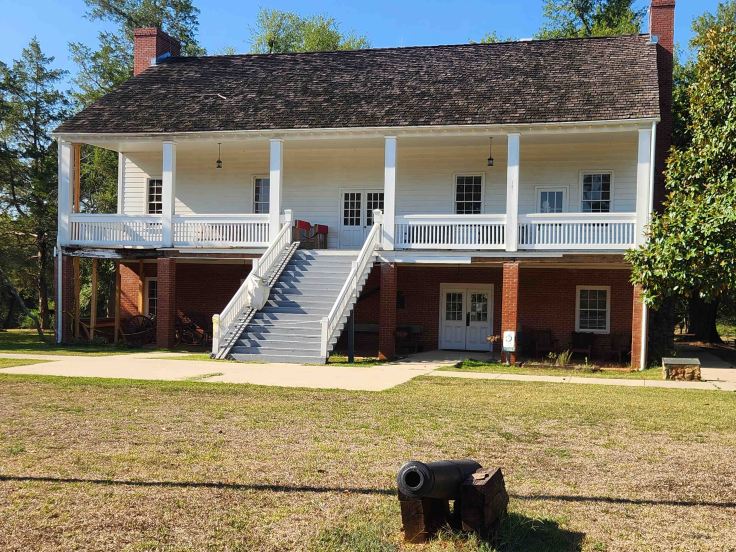
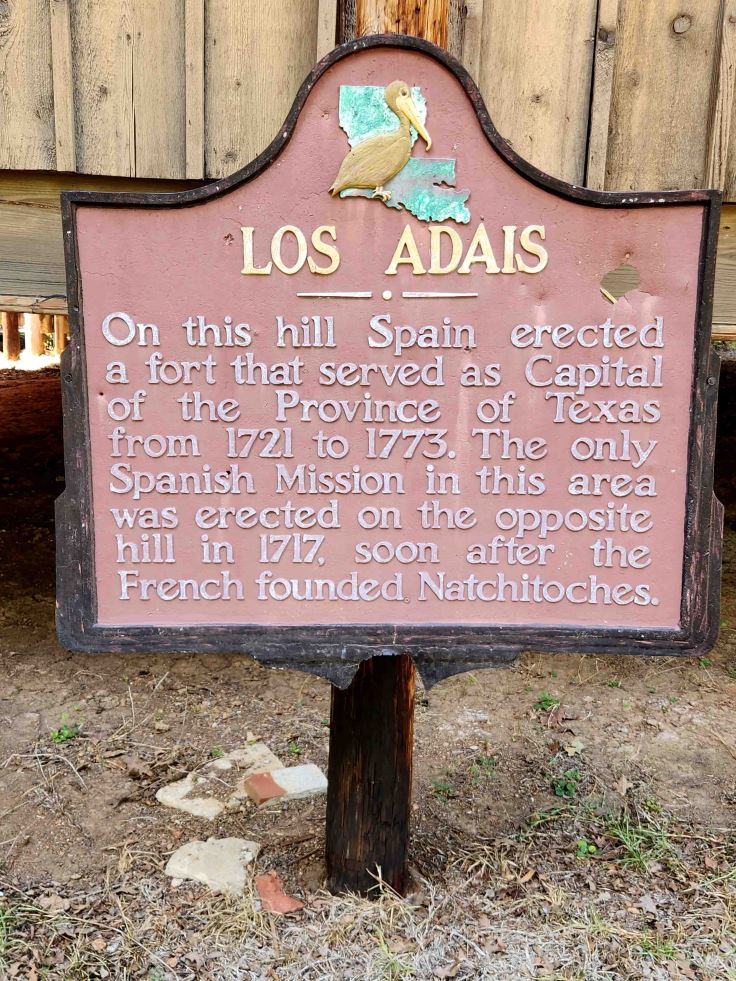
Los Adaes, the symbol of New Spain in Louisiana, was once the capital of Texas and the scene of a unique cooperation among the French, the Spanish, and the indigenous Native Americans.” After the Louisiana Purchase in 1803, the disputed western boundary resulted in continued confrontations between French troops stationed in Natchitoches and Spanish forces camped near Los Adaes. In 1806, the two commanders established a neutral strip of land between the Sabine River and Arroyo Hondo (between Los Adaes and Natchitoches) – a literal no-man’s land, which existed until 1816 with the official establishment of the Sabine River as the border. I watched a fascinating 26-minute PBS film at the Los Adaes Visitor Center about this unique 10-year geographic anomaly that attracted outlaws, bandits, pirates, and intrepid settlers, that continue to influence the area’s culture to this day. You can view the film by clicking HERE. (Louisiana State Park and Louisiana Dept. of Culture, Recreation, and Tourism websites)
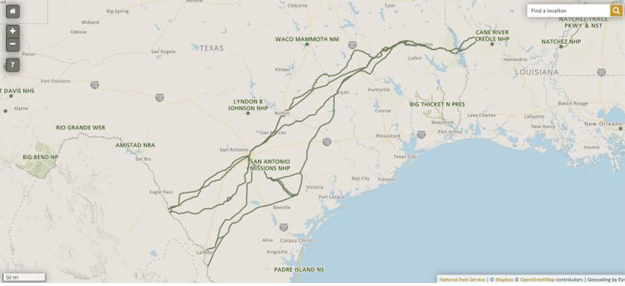
One of the Spanish colonial period “royal roads,” the El Camino de los Tejes facilitated trade between Mexico City and Los Adaes. The route was a composite of indigenous trails and trade routes which facilitated the religious conversion of Native nations, the growth of cattle ranching, and the establishment of Texas independence, and ultimately, its statehood. I had learned about this iconic route when I visited the San Antonio missions, which runs right through them, so it was neat to see its terminus in Louisiana. (NPS website)
With all this Louisiana history under my belt, it was time to head north for some iconic motorcycle rides in Arkansas!
Next time you are in the Carville area, check out the Hanson’s Disease (leprosy) Museum. It is very interesting.
We were in Eureka Springs and Mountain Home a few weeks ago. That is some beautiful country. Be careful…..on some of those backroads you can hear banjo music.



 FitHippie Adventures
Next time you are in the Carville area, check out the Hanson’s Disease (leprosy) Museum. It is very interesting.
We were in Eureka Springs and Mountain Home a few weeks ago. That is some beautiful country. Be careful…..on some of those backroads you can hear banjo music.
Chief
LikeLike
I never heard of that museum, I’ll definitely check it out next time!
LikeLike